
THEBUSINESSBYTES
BUREAU
BHUBANESWAR,
JULY 13, 2026
In a significant
breakthrough that could redefine the future of computing, an international team
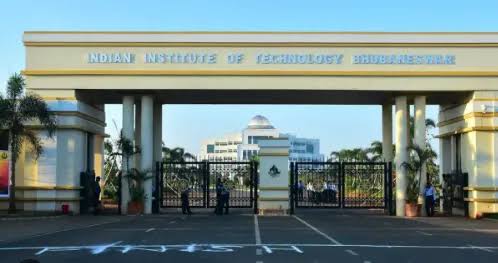
of scientists, including a researcher from the Indian Institute of Technology
(IIT) Bhubaneswar, has achieved a major milestone in the development of
next-generation computing hardware. Published in the prestigious journal Nature
Nanotechnology, the study demonstrates the world's largest synchronized network
of more than 100,000 nanoscale spintronic oscillators — a breakthrough that could
pave the way for computers capable of solving complex problems far more quickly
while consuming only a fraction of the energy required by today's systems.
The international
research team has successfully demonstrated the world's largest synchronized
network of nanoscale spintronic oscillators — tiny magnetic devices that function
collectively like a perfectly coordinated orchestra. This achievement
represents a major advance in the quest for computing technologies inspired by
the remarkable efficiency of the human brain.
Unlike conventional
computer processors, which execute operations sequentially, these miniature
magnetic devices naturally synchronize with one another in just 45 nanoseconds
(45 billionths of a second). Working collectively, they can process information
at extraordinary speeds while requiring significantly less energy than existing
electronic technologies.
The synchronized
network is nearly 1,000 times larger than previously demonstrated coherent
spintronic systems, providing the strongest evidence yet that spintronic
oscillator networks can be scaled up for practical computing applications. This
marks an important step towards the realization of unconventional computing
architectures capable of addressing the growing limitations of conventional
semiconductor technologies.
Using advanced
microwave and optical microscopy techniques, the researchers directly observed
how more than 100,000 nanoscale oscillators spontaneously organized into a single
synchronized state. The findings demonstrate that even extremely large networks
of interacting magnetic devices can achieve rapid and robust synchronization,
opening new possibilities for high-performance computing.
Although the
technology is currently at the research stage, its potential applications are
wide-ranging. Future systems based on this breakthrough could enable: Faster
and significantly more energy-efficient artificial intelligence (AI); Smarter and more reliable communication
networks; Real-time analysis of massive datasets; Advanced financial modelling
and optimization; Intelligent transportation and autonomous systems; and Large-scale
scientific simulations requiring enormous computational power.
Dr. Nilamani Behera,
Assistant Professor in the Department of Physics at IIT Bhubaneswar and one of
the lead authors of the study, said: "The demand for computing power is
growing rapidly, particularly with the rise of artificial intelligence. Our
work demonstrates that very large networks of nanoscale magnetic devices can
naturally synchronize within just a few billionths of a second. This opens
exciting possibilities for developing future computing technologies that are
not only significantly faster but also far more energy-efficient."
The research was carried
out through an international collaboration involving the University of
Gothenburg, Sweden; IIT Bhubaneswar, India; and Tohoku University, Japan.
Beyond its technological significance, the study also advances the fundamental understanding of how ultra-large networks of interacting nanoscale devices behave. The findings provide a strong scientific foundation for developing brain-inspired computing systems capable of overcoming the growing energy and performance limitations of conventional computers, paving the way for the next generation of intelligent and sustainable computing technologies.
The research paper, titled "Nanosecond Phase Ordering in Ultra-large Spin Hall Nano-oscillator Lattices for Unconventional Computing," has been published in Nature Nanotechnology, one of the world's most prestigious journals in nanoscience and nanotechnology.