THEBUSINESSBYTES BUREAU
NEW DELHI, JULY 30, 2026
India is set to significantly expand its maritime
infrastructure over the next five years, with the Centre targeting the creation
of more than 700 million tonnes per annum (MTPA) of additional port capacity by
2030 as it accelerates investments in ports, inland waterways and shipbuilding
under its Viksit Bharat 2047 roadmap.
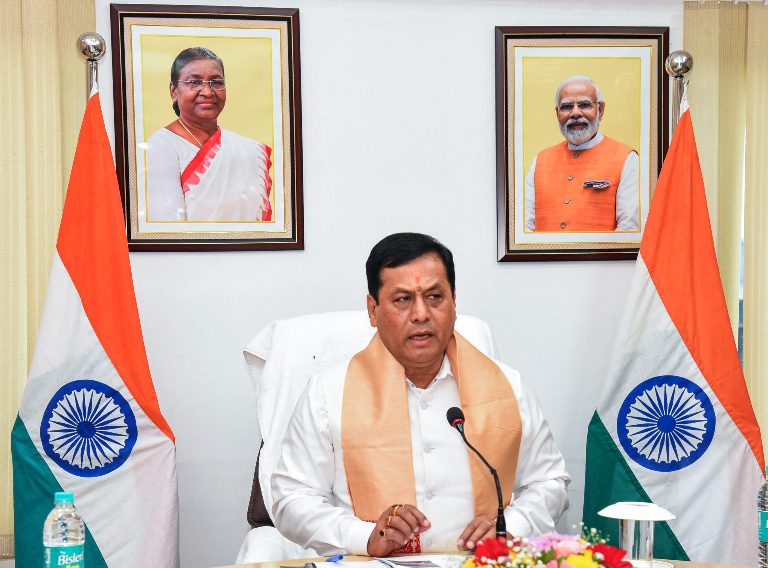
The ambitious expansion plan was reviewed at a high-level
meeting chaired by Union Minister Sarbananda Sonowal, who directed officials of
the Ministry of Ports, Shipping and Waterways (MoPSW), major ports and the
Inland Waterways Authority of India (IWAI) to fast-track the execution of
flagship projects while ensuring strict adherence to implementation timelines.
Stressing the need for coordinated action across agencies, Sonowal said the
maritime sector would play a pivotal role in positioning India among the
world's leading maritime economies.
The review underscored the rapid transformation underway in
the sector, with India emerging as the world's largest ship recycling nation
and inland waterways cargo movement crossing 200 million tonnes, enabling the
country to achieve the Maritime India Vision (MIV) 2030 target well ahead of
schedule. Sonowal said these milestones reflect the success of coordinated
policy implementation and efficient execution, adding that the momentum must be
sustained to realise Prime Minister Narendra Modi's vision of a developed India
by 2047.
He also called for building greater institutional resilience
amid evolving geopolitical uncertainties, noting that future planning should
not only focus on capacity expansion but also on creating robust systems
capable of withstanding global disruptions.
At the heart of the ministry's strategy is the creation of
more than 700 MTPA of additional port capacity by the end of the decade. The
proposed Vadhavan Port is expected to contribute 164 MTPA of capacity by
2030-31, making it one of the country's largest upcoming maritime
infrastructure projects. Other key developments include the Tuticorin Outer
Harbour, which is projected to add 39 MTPA, and the Kandla Tuna Tekra Terminal,
expected to contribute 33 MTPA by 2027-28.
Overall, the ministry plans to create nearly 682 MTPA of
additional capacity through new port infrastructure, mechanisation, operational
improvements and enhanced private sector participation. Of this, around 306
MTPA will come from major ports, 193 MTPA from strategically important
non-major ports, while another 183 MTPA will be generated through
mechanisation, efficiency enhancement, public-private partnerships and capacity
augmentation at emerging ports.
The government is simultaneously focusing on improving
operational efficiency across the port ecosystem. Cargo handling mechanisation
is targeted to increase from 76 per cent in FY26 to 93 per cent by 2030, while
the share of cargo handled through public-private partnership (PPP) projects is
expected to rise sharply from 44 per cent in 2013-14 to 85 per cent by 2030-31,
reflecting the growing role of private investment in India's port-led
development strategy.
The ministry has also set an ambitious goal of achieving 100
per cent digitisation of the maritime sector by 2030 through integrated digital
platforms aimed at improving logistics efficiency, transparency and service
delivery.
Shipbuilding has emerged as another major growth engine
within the government's maritime strategy. Domestic shipbuilding output surged
41 per cent, increasing from 40,923 gross tonnes (GT) in 2024 to 57,637 GT in
2025, highlighting the sector's expanding manufacturing capability.
To further strengthen indigenous shipbuilding, the Centre has
granted in-principle approval for greenfield shipbuilding clusters in Tamil
Nadu, Andhra Pradesh and Gujarat, each with a planned production capacity of
1.2 million GT. Similar approvals for Maharashtra and Odisha are expected
during August-September 2026.
In another significant step towards developing a globally
competitive shipbuilding ecosystem, the government has signed a tripartite
Memorandum of Understanding with HD Hyundai-KSOE to establish a shipbuilding
cluster in Tamil Nadu. The Centre will provide full financial support for the
common maritime infrastructure required to develop the industrial ecosystem.
The review also highlighted the growing sophistication of India's shipbuilding industry, with the average contract value per vessel rising more than fivefold to ₹212 crore from ₹41 crore earlier. The increase reflects the country's improving capability to build larger, technologically advanced and higher-value vessels.
Reaffirming the ministry's long-term vision, Sonowal said India's maritime transformation would be driven by world-class infrastructure, expanded logistics capacity, a robust domestic shipbuilding industry and greater global competitiveness, positioning the country as one of the world's foremost maritime economies over the coming decades.