THEBUSINESSBYTES
BUREAU
NEW
DELHI, JULY 1, 2026
India and the
European Union (EU) have stepped up cooperation on sustainable ship recycling, with
three Indian ship recycling facilities completing all compliance requirements
to become eligible for inclusion under the European Union Ship Recycling
Regulation (EUSRR). The development marks a significant milestone in India's
efforts to secure greater international recognition for its environmentally
responsible ship recycling industry.
The progress was
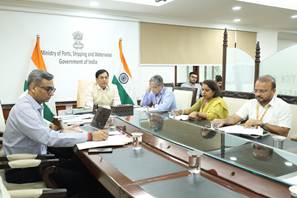
reviewed during talks between Union Minister for Ports, Shipping and Waterways
Sarbananda Sonowal and European Commissioner for Environment, Water Resilience
and a Competitive Circular Economy Jessika Roswall, who reaffirmed their
commitment to strengthening bilateral cooperation in sustainable maritime
practices.
During the
discussions, the two sides assessed the ongoing audit and compliance process
for Indian ship recycling facilities seeking recognition under the EU
regulatory framework. Sonowal said that more than 30 Indian ship recycling
yards have applied for EU recognition, with six currently undergoing compliance
and approval procedures. Of these, three facilities have successfully completed
all mandatory requirements and are now eligible to apply for listing under the
EUSRR framework.
"Under the
dynamic leadership of Prime Minister Shri Narendra Modi, India has emerged as
the world's leading ship recycling nation and is steadily strengthening its
position as a global hub for safe, environmentally sustainable and responsible
ship recycling," Sonowal said.
India's growing
dominance in the sector is reflected in the latest estimates from the United
Nations Conference on Trade and Development, which show the country's share in
global ship recycling rising from 30.1 per cent in 2024 to 35.4 per cent in
2025. During 2025, India recycled 2.99 million gross tons (GT) of ships,
representing nearly 60 per cent growth over the 1.86 million GT recycled in the
previous year.
The minister said the
Government of India is facilitating the listing of Indian ship recycling yards
through a transparent system of audits, inspections and regulatory compliance.
He noted that Indian facilities have made substantial investments in
modernising infrastructure and operational practices to meet global
environmental and safety standards, reinforcing the country's commitment to
sustainable maritime development.
Highlighting the
industry's preparedness, Sonowal said Indian ship recycling yards are backed by
robust environmental infrastructure, including effluent treatment plants,
scientific waste management systems, multi-speciality healthcare facilities
supported by the Red Cross Society, and dedicated worker housing. He added that
the government carries out both scheduled and surprise inspections to ensure
strict adherence to environmental norms, worker safety and operational
transparency.
Outlining India's
long-term maritime strategy, Sonowal said the country aims to recycle nearly
16,000 ships over the next decade and has committed USD 8 billion to strengthen
the shipbuilding and ship recycling sectors. Expanding the number of
internationally recognised Indian recycling facilities, he said, would boost
the global circular economy, generate employment and promote environmentally
sound ship recycling practices.
Roswall welcomed the
progress achieved so far and proposed the establishment of a Joint Working
Group comprising representatives from the Ministry of Environment and other
relevant ministries and organisations to facilitate closer coordination during
the next phase of the recognition process.
She stressed the importance
of unannounced inspections in maintaining high standards of compliance,
transparency and accountability, while noting that the issue would be discussed
with EU member states during the autumn session before a final decision is
taken.
The commissioner also expressed her willingness to visit Indian ship recycling facilities after the consultation and assessment process is completed. She reaffirmed that the European Union's approach remains aligned with the outcomes of the India-EU Free Trade Agreement discussions and the provisions of the Hong Kong International Convention for the Safe and Environmentally Sound Recycling of Ships.
The discussions reflect the growing strategic partnership between India and the European Union in advancing sustainable maritime practices. Recognition of compliant Indian ship recycling facilities under the EU framework is expected to strengthen global recycling capacity, promote higher environmental and safety standards, and reinforce resilient and sustainable global maritime supply chains.