THEBUSINESSBYTES BUREAU
NEW DELHI, JULY 28, 2026
Riding on robust growth in both merchandise and services
shipments and expanding market access through a series of free trade agreements
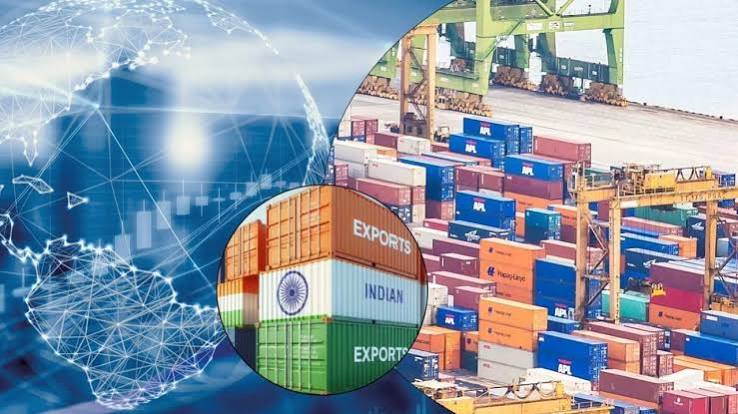
(FTAs), India’s total exports touched a record US$863.1 billion in the
financial year 2025-26, the government informed Parliament on Tuesday.
According to Minister of State for Commerce and Industry
Jitin Prasada, merchandise exports stood at US$441.8 billion, while services
exports reached US$421.3 billion, underlining the growing contribution of both
segments to India’s export performance.
The Minister said India’s recent trade agreements have
significantly widened export opportunities, particularly in the United Arab
Emirates (UAE), the United Kingdom, Australia, Oman and EFTA countries, while
helping diversify overseas markets and providing a major boost to
labour-intensive industries.
Among India’s FTA partners, merchandise exports were the
highest to ASEAN countries at US$38.42 billion, followed by the UAE (US$37.36
billion), SAFTA countries (US$25.77 billion), the United Kingdom (US$13.44
billion) and Singapore (US$11.86 billion) during FY26.
Highlighting the growing effectiveness of these trade agreements,
the Minister said their utilisation has increased steadily, reflected in the
rising issuance of Certificates of Origin (CoO) and broader product coverage
across partner markets.
Since the India-UAE Comprehensive Economic Partnership
Agreement (CEPA) came into force in May 2022, more than 4.45 lakh Certificates
of Origin have been issued. The number of tariff lines exported to the UAE
increased from 7,546 in FY22 to 8,053 in FY26, while exports reached US$37.3
billion, indicating greater export diversification and deeper market
penetration.
Similarly, under the India-Australia Economic Cooperation and
Trade Agreement (ECTA), operational since December 2022, over 2.73 lakh
Certificates of Origin have been issued. The number of tariff lines exported to
Australia rose from 5,396 to 5,668, while merchandise exports touched US$7.28
billion in FY26.
Jitin Prasada also highlighted encouraging outcomes under the
India-Mauritius Comprehensive Economic Cooperation and Partnership Agreement
(CECPA). Exports expanded across 4,345 tariff lines, compared with 3,593 tariff
lines before the agreement, with exports to Mauritius valued at around US$473
million.
The recently implemented India-Oman CEPA, which came into
force on June 1, 2026, has also shown strong early momentum. According to the
government, 783 Certificates of Origin have already been issued. Exports to
Oman surged to US$622.8 million in June 2026, registering a 54.7%
month-on-month increase and a 189.6% year-on-year jump. During the same period,
the number of tariff lines exported increased from 2,879 in May to 3,371 in
June.
The India-EFTA Trade and Economic Partnership Agreement
(TEPA), operational since October 2025, has also witnessed robust utilisation,
with 7,885 Certificates of Origin issued so far, the Ministry said.
According to the Ministry, labour-intensive sectors have
remained at the centre of India’s recent trade negotiations. Trade agreements
with the UAE, Australia, the UK, Oman, New Zealand and EFTA provide enhanced
market access for sectors such as textiles and apparel, leather and footwear,
gems and jewellery, marine products, carpets, handicrafts and agricultural
products, while protecting sensitive domestic industries through calibrated
tariff liberalisation.
The agreements provide duty-free or preferential access
across a substantial share of partner-country tariff lines, including 99% of
Indian exports to the UK, 100% duty-free access to New Zealand, 98% of Oman’s
tariff lines, and 99.6% of tariff lines under the India-EFTA TEPA, the Ministry
noted.
To further strengthen export promotion, the Department of Commerce has established a comprehensive monitoring framework involving the Directorate General of Foreign Trade (DGFT), Export Promotion Councils, Commodity Boards, line ministries, state governments and Indian Missions abroad.
The Ministry has also expanded digital trade facilitation through platforms such as Trade e-Connect and the Trade Intelligence and Analytics (TIA) Portal, which provide exporters with market intelligence, tariff information, Rules of Origin guidance, buyer-seller information, trade analytics and FTA-related advisory services to help businesses tap global opportunities and maximise the benefits of preferential trade agreements.