THEBUSINESSBYTES
BUREAU
KALINGANAGAR,
APRIL 27, 2026
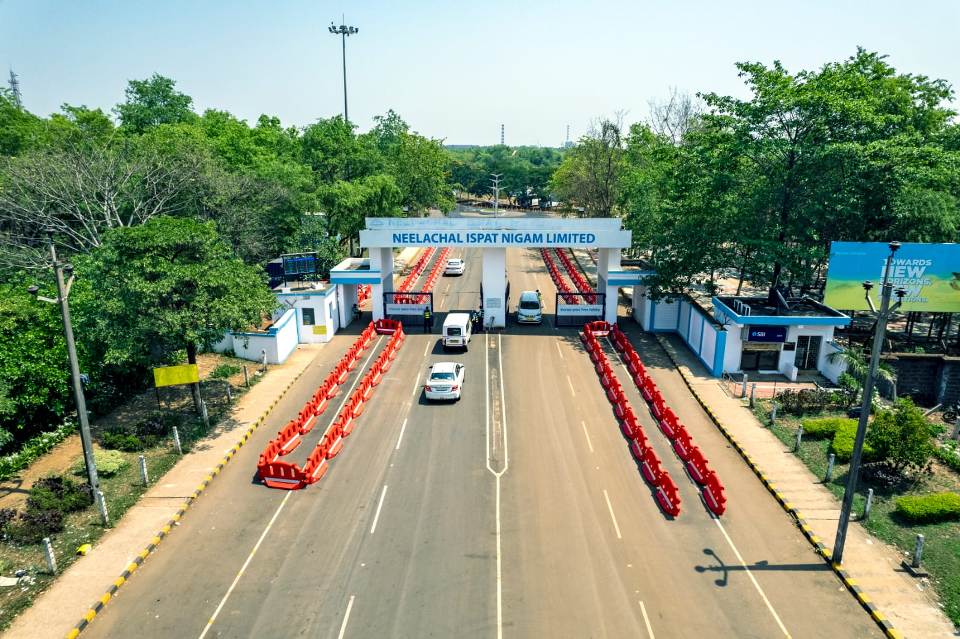
Neelachal
Ispat Nigam Limited (NINL) is placing sustainability at the heart of its future
growth with the launch of one of the largest green initiatives in Odisha's
industrial belt. The company plans to plant six lakh saplings over the next
four years as part of a comprehensive environmental strategy aligned with its
expansion plans.
Designed
as a scientific green buffer for neighbouring villages such as Baragadia and
Duburi, the plantation drive aims to mitigate dust and noise pollution, enhance
biodiversity, improve air quality, and create a substantial carbon sink. These
initiatives will underpin NINL's ambitious expansion of crude steel production
capacity from 1 million tonnes per annum (MTPA) to 4.8 MTPA.
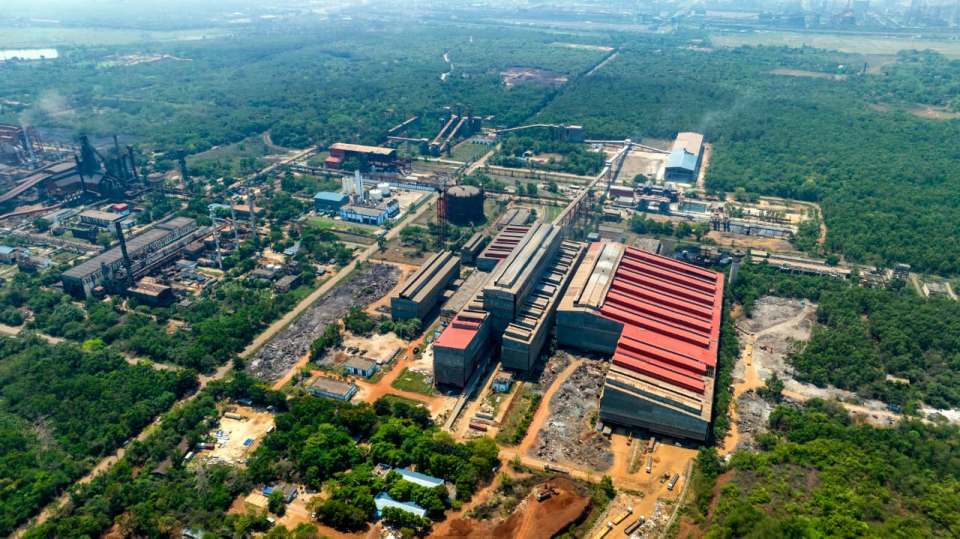 As
part of its environmental roadmap, NINL will maintain 455 hectares of green
cover, including 105 hectares at Godigotha. Significantly, the company already
exceeds regulatory requirements, with green cover spanning 42.6 per cent of its
plant area against the mandated 25 per cent.
As
part of its environmental roadmap, NINL will maintain 455 hectares of green
cover, including 105 hectares at Godigotha. Significantly, the company already
exceeds regulatory requirements, with green cover spanning 42.6 per cent of its
plant area against the mandated 25 per cent.
To
further safeguard surrounding communities, NINL will install a 15-metre-high
metallic windscreen barrier along the plant boundary. Advanced air pollution
control systems, including high-capacity bag filters and electrostatic
precipitators, will be deployed across key production units such as the Sinter
Plant and Blast Furnace.
The
company is also committed to achieving Zero Effluent Discharge (ZED) through a
state-of-the-art effluent treatment plant and dedicated sewage treatment
systems. This closed-loop water management system will ensure complete
treatment and reuse of water, with zero discharge into natural water bodies.
NINL's
sustainability strategy extends to decarbonisation and resource efficiency. The
company plans to adopt energy-efficient hot stoves, state-of-the-art pulverised
coal injection systems for its blast furnace, and waste heat recovery
technologies. It is also targeting 75 per cent renewable energy sourcing
through solar and wind power.
In
the logistics segment, NINL intends to gradually replace diesel-powered
vehicles with electric and hydrogen-based trucks as the technology matures.
Complementing these efforts is a robust circular economy framework aimed at
achieving 100 per cent recycling or reuse of by-products such as fines and
slag.
The
expansion project will also incorporate enhanced drainage conservation measures
to protect the natural flow of the adjacent Kabati Nala.
By
adhering strictly to the environmental safeguards prescribed by the Ministry of
Environment, Forest and Climate Change, NINL is setting a new benchmark for
sustainable industrial development in India. Notably, Tata Steel Kalinganagar
has already planted around seven lakh trees in and around its plant since the
commencement of its operations.