
THEBUSINESSBYTES
BUREAU
NEW
DELHI, OCTOBER 15, 2026
Odisha on Thursday
showcased its technology-driven and community-oriented road safety initiatives
at a national dialogue organised by the World Health Organisation (WHO) in New
Delhi, highlighting a comprehensive approach combining stricter enforcement,
infrastructure development, digital interventions and community participation
to reduce road accidents and fatalities.
Transport
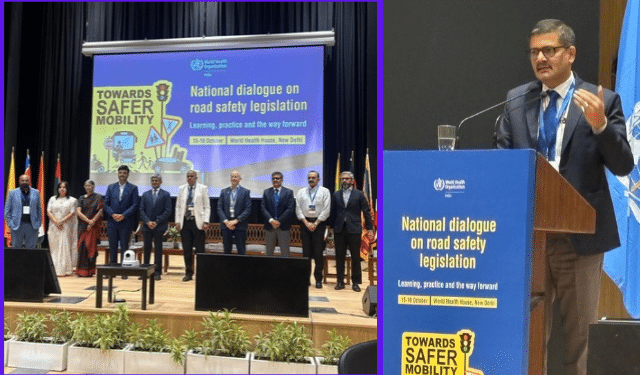
Commissioner Amitabh Thakur presented the state's initiatives at the two-day
WHO National Dialogue on Road Safety Legislation, being held at World Health
House on October 15-16 under the theme “Learning, practice and the way forward”
and the broader banner “Towards Safer Mobility”.
Outlining Odisha's
multi-pronged strategy, Thakur emphasised the role of technology-enabled
enforcement, improved road infrastructure and trained community responders in
strengthening road safety and ensuring timely assistance to accident victims.
The state has
intensified enforcement under Section 167 and related provisions of the Central
Motor Vehicles Rules, deploying electronic systems to detect violations,
including driving without valid insurance or pollution certificates, speeding
and other traffic offences. Photographic and video evidence supports the
issuance of electronic challans, while annual certification of enforcement
devices under Rule 167A is being prioritised to ensure accuracy and
reliability.
Odisha is also
addressing infrastructure-related risks through the establishment of truck
terminals to curb unauthorised highway parking, a major source of congestion
and accidents. In another intervention aimed at reducing crashes on rural roads
and highways, the state is setting up goshala facilities to manage stray
cattle.
Community
participation forms a key pillar of the state's road safety framework. Under
the Rakshak scheme, local residents and workers in accident-prone areas are
trained as first responders to provide immediate assistance to victims during
the crucial golden hour, when timely intervention can significantly improve
survival chances.
The initiative has
been expanded through the Junior Rakshak programme in partnership with the
National Cadet Corps, which seeks to equip thousands of cadets with first-aid
and emergency response skills, thereby widening the network of trained
volunteers available to assist accident victims.
Technology is further
strengthening emergency coordination through the AMA RASTA WhatsApp chatbot.
The platform enables citizens to report road accidents by messaging a dedicated
number, triggering alerts to the nearest police personnel, ambulance services,
Regional Transport Office and trained responders to facilitate quicker rescue
and medical assistance.
Thakur also
highlighted AMA SuVahak, an initiative aimed at promoting women's empowerment
and expanding their participation in the transport sector by supporting them as
professional drivers and taxi entrepreneurs.
The programme
combines skill development through Institutes of Driving Training and Research
with financial assistance, including interest support and help with down
payments, to make professional driving and transport entrepreneurship more
accessible to women. The initiative also seeks to contribute to safer mobility
by promoting wider participation in the sector.
Officials said
Odisha's approach integrates enforcement, engineering interventions, emergency
response and inclusive livelihood opportunities, positioning road safety as a
coordinated public policy priority rather than merely a traffic regulation
issue.
The state's community-based responder initiatives have also attracted national attention, with such models informing wider policy discussions on strengthening emergency assistance and reducing preventable road deaths.
The two-day dialogue brought together stakeholders to exchange legislative experiences, practical interventions and policy perspectives on reducing road fatalities and injuries, with a focus on translating effective road safety measures into stronger implementation on the ground.