THEBUSINESSBYTES
BUREAU
BHUBANESWAR,
OCTOBER 29, 2026
Odisha has
strengthened its global clean energy partnerships by signing four memoranda of
understanding (MoUs) with international technology and energy companies and
Nanyang Technological University (NTU), Singapore, to accelerate research and
innovation in renewable energy, artificial intelligence (AI), battery storage,
smart grids and green hydrogen.
The agreements were
signed at the Asia Clean Energy Summit (ACES), held as part of Singapore
International Energy Week (SIEW) 2026 from October 27 to 29, marking a
significant step in the state's efforts to attract global expertise and develop
advanced solutions for its clean energy transition.
Odisha Deputy Chief
Minister Kanak Vardhan Singh Deo lauded the Energy Department's initiative,
saying international partnerships would play a crucial role in building a
future-ready and sustainable energy sector.
"Odisha is
committed to building a future-ready and sustainable energy sector through
innovation, research and global collaboration. These MoUs will strengthen our
partnerships with leading international institutions and technology companies,
enabling us to explore advanced solutions in energy storage, artificial
intelligence, smart grids and green hydrogen," Singh Deo said.
Such collaborations
would support the state's renewable energy ambitions, enhance energy security
and help Odisha emerge as a key destination for clean energy investment and
innovation, he added.
The four agreements
cover a range of emerging technologies with potential applications across the
state's energy ecosystem. Under the MoU with Tata Consultancy Services (TCS),
Singapore, the partners will undertake joint research on digitalisation and
AI-enabled workbench solutions for smart governance and consumer services.
The agreement with
Singapore-based VFlowTech will focus on advanced research in flow battery
technologies aimed at strengthening grid resilience and improving energy
storage capabilities.
The MoU with PHENOGY,
Singapore, provides for research on sodium-ion battery-based battery energy
storage systems (BESS) for grid applications, while the agreement with
Finland's DANFOSS Drives Oy will focus on next-generation microgrids, smart
grid integration and green hydrogen production.
The latest agreements
build on a research collaboration initiated in January 2023, when the Odisha
Energy Department signed an MoU with NTU Singapore and IIT Bhubaneswar to
advance research in renewable energy technologies.
The new partnerships
expand the scope of that collaboration by bringing global industry expertise
into joint research and technology development, with a greater emphasis on
emerging technologies and their practical applications in the energy sector.
Dr Debidutta
Tripathy, Special Secretary in the Odisha Energy Department, and Prof Madhavi
Srinivasan, Executive Director of the Energy Research Institute at NTU (ERI@N),
signed the MoUs on behalf of the state government and NTU, respectively.
Dr Satya Priya Rath,
Managing Director of GRIDCO Ltd, Debasish Das, Director (Commercial) of GRIDCO,
and Prof Subhransu Ranjan Samantaray, Dean (PG and Research) at IIT
Bhubaneswar, were also present at the summit.
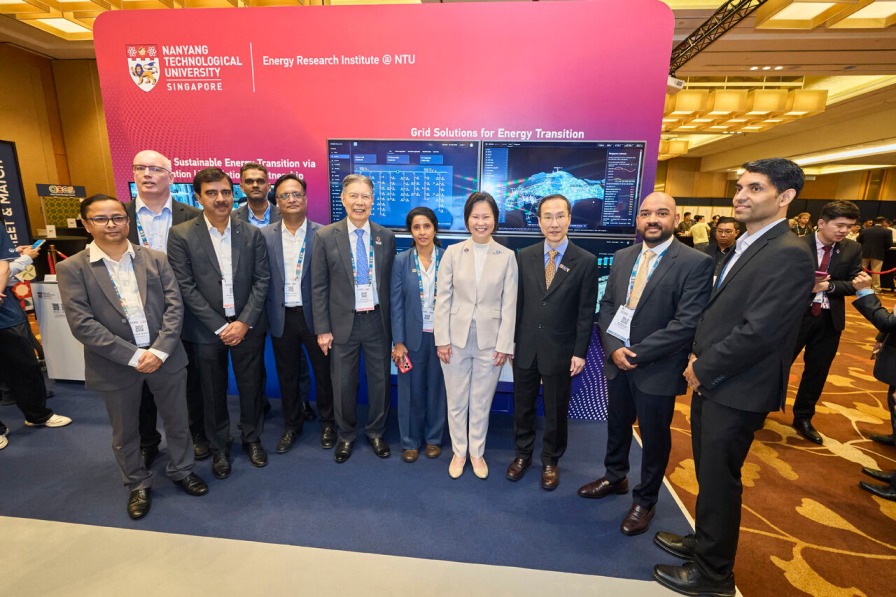
On the sidelines of
the event, Energy Department officials met Singapore Minister of State for
Trade and Industry Siow Huang Gan and representatives of Singapore's Ministries
of Foreign Affairs and Trade and Industry, including Permanent Secretary
(Energy and Trade) Augustin L.
The Odisha delegation
briefed the Singaporean representatives on collaborative initiatives being
pursued by GRIDCO, IIT Bhubaneswar and NTU Singapore, highlighting
opportunities for deeper cooperation in clean energy research and technology
development.
The state government expects the partnerships to strengthen industry-academia collaboration, facilitate technological advancement and improve the resilience of its power grid while supporting long-term energy security and sustainable development.
The agreements underscore Odisha's efforts to leverage international research capabilities and private-sector innovation to support its renewable energy transition and prepare its energy infrastructure for emerging technological challenges.