THEBUSINESSBYTES
BUREAU
JAMNAGAR,
OCTOBER 29, 2026
Wildlife experts,
scientists, veterinarians and conservation leaders from 98 institutions across
30 countries, along with representatives of 29 Indian zoological institutions,
have gathered in Jamnagar for the Eurasian Regional Association of Zoos and
Aquariums (EARAZA) Annual Conference 2026, hosted by Vantara.
Held from October 26
to 29 under the theme “Strengthening Global Partnerships for Wildlife
Conservation”, the conference seeks to strengthen international collaboration,
facilitate data sharing and align conservation programmes to improve wildlife
care, research and animal welfare across regions.
The gathering brings
together professionals from across the world to exchange scientific knowledge,
share field experiences and develop collaborative approaches to challenges
ranging from species conservation and veterinary care to disaster preparedness,
biodiversity protection and public engagement.
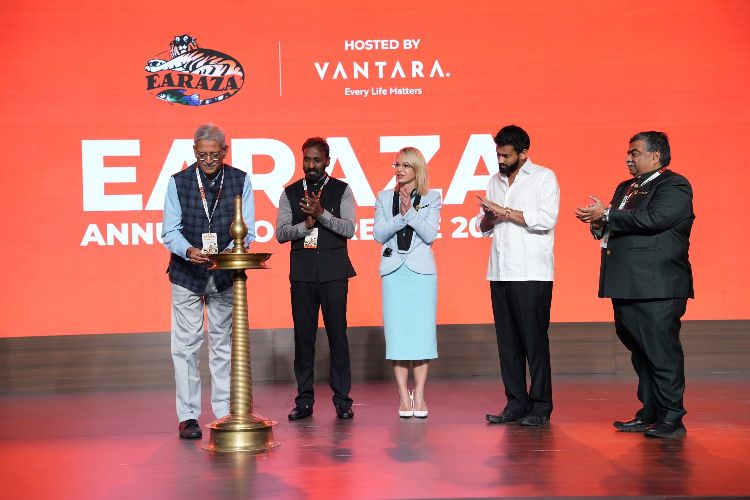
The inaugural ceremony
featured a performance by three-time Grammy Award-winning composer and
environmentalist Ricky Kej, followed by the traditional lighting of the lamp by
EARAZA President Svetlana Akulova, Indian Institute of Science professor Raman
Sukumar and Central Zoo Authority (CZA) Member Secretary V. Clement Ben.
Welcoming the
delegates, Vantara Chief Executive Officer Vivaan Karani announced that the
ANTZ Software Platform would be provided free of cost to all EARAZA members for
one year.
ANTZ is a secure,
cloud-based platform designed to support the management of zoological
institutions. Its Open Data Exchange facility enables participating
institutions to share information, potentially strengthening coordinated
decision-making and collaborative conservation efforts.
“Vantara means the Star of the Forest. But a
single star cannot illuminate the entire sky. It takes a constellation,” Karani
said, emphasising that the conference was an opportunity not only to share the
host institution's work but also to learn from others and support their
initiatives.
“When one institution advances, it should
create opportunities for others to advance with it,” he said.
Akulova said
conservation could no longer be confined by national boundaries, stressing that
the sharing of data, expertise and responsibility could make individual
programmes more effective.
The conference, she
said, aims to transform an international network of zoological institutions
into a stronger and more integrated partnership.
Sukumar, an Asian
elephant ecologist and honorary professor at the Indian Institute of Science,
highlighted the importance of long-term scientific research, knowledge sharing
and adaptive approaches to conservation.
“Elephants have taught me that conservation is
a long journey,” he said, adding that it was encouraging to see the global
community come together in India, which is home to most of the world's Asian
elephants.
Clement Ben said
zoological institutions played an important role in conservation, research and
public education, adding that such gatherings helped improve animal welfare
standards and strengthen cooperation across regions.
The conference
programme covers a broad spectrum of wildlife conservation initiatives,
including international species-management programmes for the Amur tiger,
Oriental stork, Blakiston's eagle-owl and great bustard.
Participants are also
discussing specialised conservation efforts involving Boiga snakes and the
reintroduction of the long-eared hedgehog, reflecting the diversity of species
and habitats that require coordinated interventions.
Akulova has outlined
a vision for a global biodiversity data infrastructure that would enable
information and lessons generated by individual institutions to inform
conservation decisions elsewhere.
 Beyond
species-specific programmes, sessions are examining animal-welfare assessment
based on individual outcomes, emergency preparedness in animal-care facilities,
disaster response in the wild and the development of veterinary capacity across
regions.
Padma Shri awardee Dr
K. K. Sarma, widely known as the Elephant Doctor of Asia, is sharing field
experience in managing human-wildlife conflict. Moscow Zoo's chief veterinary
officer is discussing polar bear rescue operations in subarctic conditions,
while wildlife biologist and television presenter Forrest Galante is exploring
the role of mass media in taking conservation messages to wider audiences.
Other sessions focus
on urban biodiversity, citizen science, wildlife diagnostics, nutrition and the
changing visitor experience at zoological institutions. EARAZA members are also
holding a voting session to determine the association's priorities and
direction for the coming year.
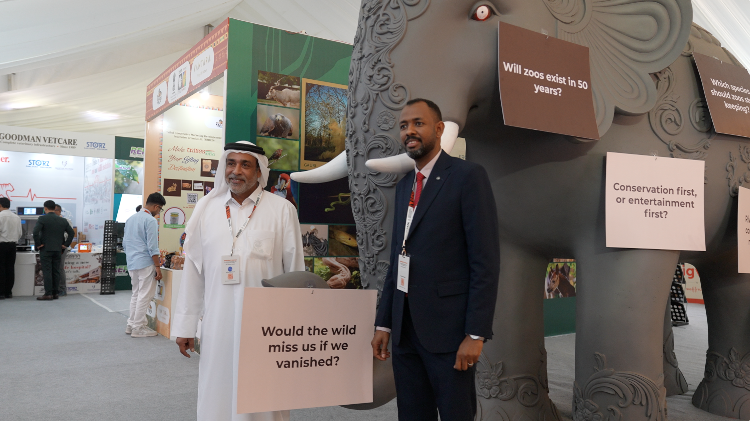
The conference has introduced interactive initiatives to encourage open discussions on issues confronting the zoological and conservation sectors.
The Elephant in the
Room video booth invites participants to respond to difficult questions,
including whether zoos will continue to exist in 50 years and whether greater
transparency would strengthen or undermine public trust. The initiative aims to
build a shared repository of professional perspectives on the future of
wildlife care.
The Solution Station
allows delegates to submit practical challenges relating to animal care and
conservation, including rescue operations, genetics, biosecurity and welfare,
for expert guidance.
Through Innovation in
Action, participants can showcase solutions that have delivered tangible
results in their respective institutions, encouraging the exchange of
approaches that could be adapted elsewhere.
The accompanying
exhibition features 13 exhibitors from seven countries under the theme
“Explore. Connect. Discover.”
The participating
organisations are showcasing technologies and services spanning endoscopy and
minimally invasive veterinary procedures, diagnostics, genomics, molecular
tools, artificial-intelligence-driven microscopy, assisted reproduction for
conservation breeding, avian incubation and remote drug delivery.
Among the exhibitors
are Karl Storz, IDEXX, Inventa Systems, SigTuple, IMV Imaging, Grumbach and
Daninject. Tribes India is presenting traditional tribal art, textiles and
handicrafts, adding a cultural dimension to the event.
Vantara's exhibition
pavilions highlight developments in wildlife-care technology, nutrition,
architecture and innovation, alongside a virtual-reality experience offering
visitors a glimpse into its operations.
New tools associated
with the ANTZ platform include Vespr, an edge-AI-based bioacoustic monitoring
system that identifies species directly on the device; Smart Egg Analysis,
which enables teams to measure and candle eggs and monitor their heartbeats on
a single screen; and an NFC-enabled, belt-worn device that allows caregivers to
record animal-care rounds with a simple tap.
The technologies
reflect the growing role of digital systems, automation and data-driven tools
in supporting wildlife management and institutional coordination.
The conference also
marks the release of the Indian Zoo Year Book, Volume 11, 2026.
At the closing
ceremony on October 29, six conservation and zoological-sector leaders are set
to receive Lifetime Achievement Awards presented by Vantara in recognition of
their contributions to the field.
The awardees include
Akulova, General Director of Moscow Zoo and President of EARAZA; René Franěk,
founder and director of Chleby Zoo in the Czech Republic, known for breeding
achievements involving the country's first red-shanked douc langurs and rhinoceros
hornbills; and Azer Huseynov, director of Baku Zoological Park and
Vice-President of EARAZA.
The Indian recipients
are S. C. Sharma, a founding Member Secretary of the Central Zoo Authority, and
former CZA Member Secretaries D. N. Singh and B. S. Bonal.
The conference will conclude with the handover of the EARAZA flag to the host of the 2027 edition, marking the transition to the association's next annual gathering.
As the four-day meeting draws to a close, its emphasis remains on translating scientific exchange into sustained cooperation, with participating institutions seeking to build partnerships that strengthen wildlife conservation, improve animal welfare and expand the collective capacity to respond to emerging challenges.