
Odisha's rooftop solar revolution
is well underway, but its ability to sustain momentum and evolve into a
national model will ultimately depend on addressing concerns over quality,
transparency, accountability and consumer trust, says
Priyabrat Biswal
Odisha's
rooftop solar revolution is being celebrated as one of the country's most
remarkable clean energy success stories. From securing top honours at the PM
Surya Ghar Excellence Awards to crossing the milestone of one lakh rooftop
solar installations, the state has emerged as a frontrunner in India's
ambitious push towards decentralized renewable energy. Yet, behind the
impressive numbers and national recognition lies a more complex story — one
that combines rapid growth with mounting concerns over quality, accountability,
consumer protection and transparency. As Odisha marches towards its ambitious
target of three lakh rooftop solar installations by March 31, 2027, the state
finds itself at a critical juncture where the sustainability of success may
depend as much on governance and quality assurance as on installation numbers.
The
PM
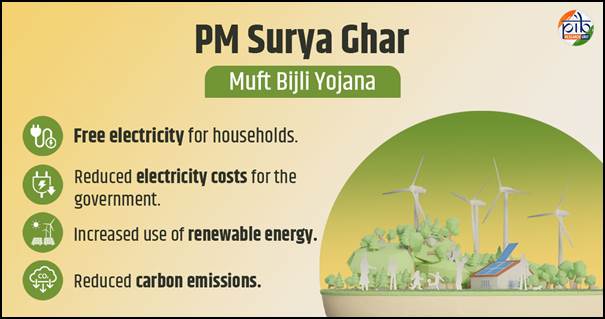
Surya Ghar: Muft Bijli Yojana has transformed India's rooftop solar
landscape at an unprecedented pace. As of June 3, 2026, more than 70.59 lakh applications
had been received across the country, resulting in over 33.57 lakh rooftop
solar installations and a cumulative installed capacity exceeding 12,092 MW.
Odisha has emerged as one of the standout performers under the scheme,
registering 2.43 lakh applications and completing 1,01,056 rooftop solar
installations with a cumulative capacity of 265.25 MW. The achievement is
particularly significant considering that the state has successfully expanded
rooftop solar adoption beyond major urban centres into several semi-urban and
rural regions.
The
state's performance has earned national recognition. Odisha recently swept the PM
Surya Ghar Excellence Awards, securing first position in three major
categories — Maximum Consumer
Applications, Maximum Solar Installations
and Maximum DISCOM Inspections — while
also claiming third place nationally for Maximum
Vendor Registrations. The awards reflect the scale of consumer
participation and administrative effort that have gone into implementing the
programme. For a state that only a few years ago was considered a relatively
modest player in India's rooftop solar sector, the transformation has been
remarkable.
Much
of this success has been driven by the state's four power distribution
companies. Among them, TPCODL has emerged as the clear leader, accounting for
33,941 rooftop solar installations from 83,038 applications and delivering
93.72 MW of installed capacity. Covering Bhubaneswar, Cuttack and surrounding
urban centres, TPCODL has benefited from greater consumer awareness, stronger
purchasing power and easier access to vendor networks. TPWODL has emerged as a
strong performer in western Odisha, recording 29,563 installations and an
installed capacity of 83.46 MW from nearly 59,500 applications. TPNODL has also
delivered encouraging results, completing 26,324 installations with a capacity
of 59.90 MW. TPSODL, however, appears to be lagging behind its counterparts,
with 11,361 installations and 28.31 MW capacity despite receiving over 42,000
applications. The performance gap
suggests that while consumer interest exists across all regions, the pace of
conversion from application to installation remains uneven.
The
district-wise distribution of rooftop solar systems reveals another interesting
trend. Solar adoption in Odisha is heavily concentrated in a relatively small
number of districts. The top ten districts alone account for 62,638
installations, representing nearly 62 per cent of all rooftop solar systems
installed in the state. Khordha leads the list with 10,350 installations,
followed by Balasore with 9,571 and Cuttack with 8,103. Ganjam, Mayurbhanj,
Sundargarh, Bargarh, Jajpur, Jagatsinghpur and Bolangir complete the top ten
rankings. The concentration highlights the strong role played by urbanization,
economic activity and consumer awareness in driving solar adoption. It also
indicates that while rooftop solar has
gained significant traction in some regions, the benefits have not been
distributed evenly across the state.
The
contrast becomes even more apparent when examining the least-performing
districts. Kandhamal has recorded only 413 installations, while Malkangiri and
Deogarh have achieved 482 and 512 installations respectively. The disparity
between leading and lagging districts is striking. Khordha alone has installed nearly twenty-five times more rooftop solar
systems than Kandhamal. Such gaps raise important questions about
accessibility, awareness and infrastructure readiness in Odisha's tribal and
geographically remote districts. If the state is to achieve an inclusive
energy transition, greater focus will need to be placed on ensuring that these
regions are not left behind in the solar revolution.
While
Odisha's achievements are undoubtedly impressive, the road ahead presents a
formidable challenge. With just over one lakh installations completed so far,
the state still needs to add nearly two lakh more rooftop solar systems to
achieve its target of three lakh installations by March 31, 2027. In practical
terms, this means Odisha must almost triple its existing installation base
within less than a year. Achieving such growth will require not only sustained
consumer interest but also significant improvements in implementation
efficiency, vendor performance and consumer confidence.
It
is precisely on these issues that concerns are beginning to emerge. The rapid
expansion of the programme has been accompanied by a sharp increase in the
number of registered vendors. While the growth of the vendor ecosystem is
essential for scaling up installations, questions are increasingly being raised
about the quality of work being delivered on the ground. Consumers and industry
observers alike have reported instances of substandard civil work, poor wiring
practices, delays in project completion and inadequate after-sales support.
There is a growing perception that while the focus remains heavily on achieving
installation targets, quality assurance mechanisms have not evolved at the same
pace.
One
of the most significant concerns relates to accountability. Under the existing
framework, consumers often find themselves dealing directly with vendors,
particularly after subsidy disbursement. In cases where workmanship is poor or
defects emerge, many consumers are unsure where responsibility ultimately lies.
Questions are increasingly being asked about whether uniform standards exist
for installation quality, whether material specifications are independently
verified, and whether there is any systematic inspection process to ensure
compliance before commissioning. Given that rooftop solar systems are expected
to operate safely for decades, these concerns cannot be dismissed lightly.
Poor-quality installations could potentially create long-term safety risks,
including electrical faults, structural weaknesses and fire hazards.
Concerns
over consumer grievance redressal are adding to the unease. During the course
of this investigation, an aggrieved consumer shared details of an installation
that was allegedly promised within two days but reportedly took over a month to
become operational. According to the consumer, several components of the
associated civil work remained incomplete and repeated requests for
rectification yielded little response. The consumer further claimed that
complaints lodged with the concerned authorities failed to result in timely
corrective action. While individual
cases may not necessarily represent the entire programme, such experiences
highlight the importance of having robust grievance resolution mechanisms
capable of responding quickly and effectively.
In
an effort to better understand these concerns, detailed queries were sent on
May 22, 2026 to Tata Power's Corporate Communication Department. The questions
sought clarification on installation standards, material quality benchmarks,
pricing regulations, inspection mechanisms, warranty accountability and
electricity billing methodologies under the rooftop solar programme. Specific
queries also sought to understand whether installation quality is independently
verified, whether vendors operate under standardized guidelines, and how the
much-publicized 25-year solar panel guarantee is enforced in cases of equipment
failure. Additional questions focused on consumer billing, including how
surplus electricity generation is adjusted and whether claims regarding
"zero electricity bills" adequately account for fixed charges and
electricity duty.
Despite
the detailed communication, no response was received. A reminder sent on May
26, 2026 also remained unanswered. The absence of any official clarification
has only intensified concerns regarding transparency and consumer awareness. In a programme of this scale and public
significance, proactive communication is essential not only for addressing
consumer doubts but also for maintaining trust in the system.
Another
area where confusion persists is the availability of state government
incentives. While awareness regarding Central Government subsidies has improved
considerably, many consumers remain unclear about Odisha Government subsidy
provisions, and application procedures. Potential beneficiaries often struggle
to find clear information regarding available financial support, documentation
requirements and timelines for subsidy disbursement. Improved public
communication on these aspects could play a significant role in accelerating
adoption, particularly in rural and lower-income households where affordability
remains a major consideration.
The
coming months may well determine the future trajectory of Odisha's rooftop
solar programme. There is little doubt that the state has established itself as
one of India's leading renewable energy success stories. The numbers are
impressive, the national recognition is significant, and public interest
remains strong. Yet the next phase of
growth will require more than simply adding new installations. It will require
building confidence that every installation meets acceptable quality standards,
that grievances are resolved promptly, that vendors are held accountable, and
that consumers are fully informed about both benefits and responsibilities.
As
Odisha races towards its ambitious three-lakh-installation target, the
challenge is no longer merely one of expansion. It is one of ensuring that
growth is accompanied by quality, transparency and trust. The state's rooftop
solar revolution has undoubtedly begun. Whether it can sustain its momentum and
emerge as a truly model programme for the nation will depend on how effectively
these emerging concerns are addressed. For now, Odisha's solar success story
remains one of immense promise — but also one facing its most important test
yet.