
THEBUSINESSBYTES BUREAU
MUMBAI, OCTOBER 7, 2026
The Reserve Bank of
India on Wednesday raised its benchmark repo rate by 25 basis points to 5.5 per
cent, marking a sharp reversal in its monetary policy trajectory as it seeks to
contain rising inflation amid the continuing crisis in West Asia.
The rate hike, the
first in nearly three-and-a-half years, is set to push up borrowing costs
across the economy, making home, vehicle and corporate loans more expensive and
potentially raising EMIs for existing borrowers.
Announcing the
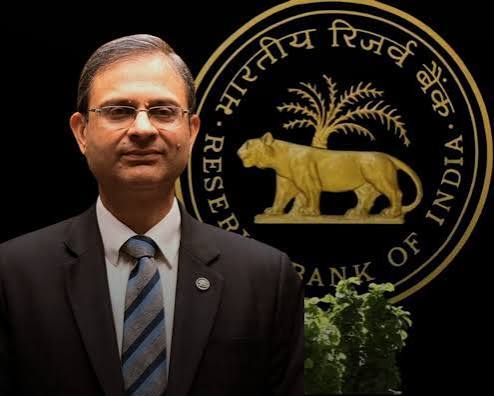
bi-monthly monetary policy, RBI Governor Sanjay Malhotra said the Monetary
Policy Committee (MPC) had unanimously decided to raise the policy repo rate by
25 basis points.
The move marks a
significant departure from the central bank’s recent rate-cutting cycle. The
RBI’s last repo rate hike came in February 2023, when it raised the policy rate
by 25 basis points to 6.5 per cent. The central bank then kept rates unchanged
through 2023-24 before beginning its rate-cut cycle in 2025.
More significant than
the rate increase itself was the MPC’s decision to shift its policy stance to
‘calibrated tightening’ from ‘neutral’, signalling that the central bank is
prepared to tighten both banking-system liquidity and policy rates to contain
inflation.
The change in stance
also makes a near-term rate cut unlikely, economists said, while raising
expectations of further tightening in the months ahead.
Radhika Piplani,
Chief Economist, Motilal Oswal Financial Services Ltd, said the 25-basis-point
hike was widely expected by markets, but the change in stance was the more
important signal.
“The RBI raised the repo rate by 25bps to 5.50
per cent, a move the markets had widely expected. More significantly, it
shifted its policy stance from neutral to calibrated tightening,” Piplani said.
She expects another
75 basis points of tightening in the current cycle, taking the repo rate to
6.25 per cent, including a 25-basis-point hike in December, which she said
markets have already largely priced in.
The policy action
comes as retail inflation has started moving higher. Consumer price inflation
rose to 4.82% in August from 4.45% in July, adding to concerns over the
persistence of price pressures amid geopolitical uncertainty and volatile commodity
prices.
The RBI raised its
full-year inflation forecast to 5.2 per cent, in line with Piplani’s estimate.
She said the central bank appeared cautious on inflation but relatively
comfortable with the growth outlook.
The RBI has also
projected inflation at 6 per cent in the third quarter, according to Sumit
Singhania, Head of Research, Bajaj Broking.
Singhania said the
25-basis-point hike was “defensible”, but the shift to calibrated tightening
mattered more than the rate increase itself as it effectively ruled out near-term
rate cuts.
“With CPI rising to 4.8 per cent in August and
projected at 6 per cent in Q3, at the upper edge of the tolerance band, acting
now makes sense,” Singhania said.
He noted that the
economy’s projected 7.1 per cent growth gives it enough room to absorb tighter
financial conditions.
Despite the
tightening bias, the RBI remained relatively upbeat about economic growth,
raising its FY27 GDP growth forecast to 7.1 per cent from 6.7 per cent.
Piplani said she
expects real GDP growth to be slightly higher at 7.2 per cent, arguing that
India’s growth story remains intact despite global headwinds and a firmer
domestic interest-rate environment.
“The private capex cycle appears to be
regaining momentum, even with global headwinds and a firmer domestic rate
environment,” she said.
Strong bank credit
growth should continue to support activity across large, medium and small
enterprises, she added, while services and the banking sector in particular are
likely to register robust growth.
The RBI’s decision
also comes against a challenging global backdrop. Major central banks have been
tightening monetary conditions as they grapple with persistent inflation and
higher energy prices.
The US Federal
Reserve raised its benchmark rate by 25 basis points in September, while
markets continue to price in the possibility of another hike by December. The
October 28 FOMC meeting remains a key risk, Singhania said.
The European Central
Bank had also raised its key interest rate by 25 basis points before the Fed’s
move.
According to
Singhania, the global rate environment is putting pressure on the rupee and
limiting the RBI’s room to maintain an accommodative stance.
While the repo-rate
decision was unanimous, the stance vote was 4-2, indicating that two MPC
members preferred to retain greater policy flexibility rather than commit to a
tightening bias.
Singhania pointed out
that much of the current inflation pressure is supply-driven, stemming from
factors such as the monsoon, El Niño and energy prices. Rate hikes, therefore,
have limited ability to directly address the underlying sources of inflation.
“The real aim is to prevent second-round
effects,” he said.
Core inflation,
excluding precious metals, stands at around 2.9%, suggesting that underlying
price pressures remain relatively contained.
“If that holds and price pressures don't
broaden, the RBI would do best to pause at 5.50 per cent in December, though a
further Fed hike could test that call,” Singhania said.
The RBI’s latest move
has opened up a sharper debate over how far the tightening cycle could go.
While Piplani expects the repo rate to rise by another 75 basis points to 6.25 per
cent, Singhania sees a case for the central bank to pause at 5.50 per cent in
December if underlying inflation remains contained.
For borrowers, however, the immediate implication is clearer: higher policy rates are likely to translate into costlier credit, putting upward pressure on EMIs for households and borrowing costs for companies.
The RBI’s message is equally clear — with inflation risks resurfacing and global monetary conditions tightening, growth remains important, but price stability is once again taking centre stage.