THEBUSINESSBYTES BUREAU
NEW DELHI, NOVEMBER 5, 2026
The Centre's Self-Reliant India (SRI) Fund has leveraged nearly Rs 48,000
crore in private investment and supported 824 micro, small and medium
enterprises (MSMEs), with the government stepping up efforts to channel growth
capital into women-led businesses, the MSME Ministry said on Thursday.
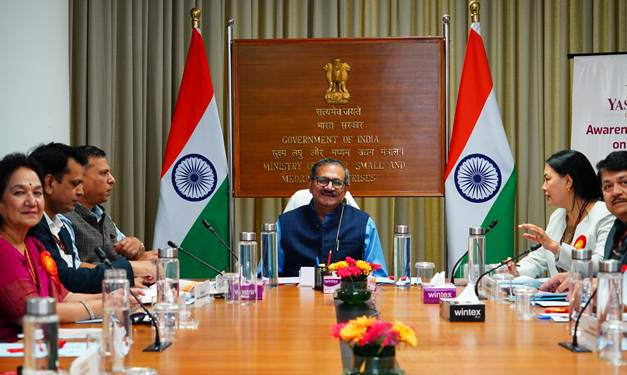
The Ministry of Micro, Small and Medium Enterprises organised an
awareness workshop on the SRI Fund in New Delhi on November 4 as part of the
Yashashvini Campaign, aimed at promoting women entrepreneurship and improving
their access to equity financing.
Chairing the workshop, MSME Secretary Bharat Khera said commitments worth
Rs 8,305 crore had been made against the fund's Rs 10,000-crore corpus, while
private venture capital and private equity investments of nearly Rs 48,000
crore had been leveraged.
The fund has empanelled 72 Daughter Funds, which have invested Rs 21,330
crore in 824 MSMEs, of which around 74 per cent are micro enterprises, he said.
Highlighting the impact of the initiative, Khera said 77 beneficiary
enterprises had graduated to a higher category, six had been listed on stock
exchanges and 32 exits had been completed at a profit.
The Secretary said registrations on the Udyam and Udyam Assist portals
had crossed 10 crore on October 30, 2026, marking a significant milestone in
the formalisation of the MSME sector. Women-owned enterprises account for 37.6
per cent of these registrations, and the government aims to raise their share
to 50 per cent.
He emphasised that formalisation must now be followed by scaling up
businesses, for which access to growth capital is crucial. Credit and equity
financing should complement each other to enable enterprises to expand,
strengthen their balance sheets and improve their competitiveness.
Khera further said MSME credit outstanding had increased from around Rs
10 lakh crore in 2014 to more than Rs 40 lakh crore, while non-performing
assets in the sector had declined to approximately 3.5 per cent.
An additional Rs 2,000 crore has been allocated to the SRI Fund in the
Union Budget 2026-27 to support micro enterprises. He also highlighted the
newly launched Rs 10,000-crore SME Growth Fund, which will make direct
investments in small and medium enterprises.
Advising entrepreneurs to improve their financial preparedness, Khera
stressed the importance of maintaining proper financial records and adopting an
appropriate legal structure. Bringing in equity capital, he said, could also
improve an enterprise's ability to secure debt financing.
Earlier, Additional Secretary and Development Commissioner in the MSME
Ministry, Dr Rajneesh, outlined the evolution of the SRI Fund, which was
conceived to provide equity support to MSMEs beyond conventional debt
financing.
The government had committed Rs 10,000 crore to the fund with the
expectation of mobilising four times that amount from private investors. He
said several enterprises backed by the fund had recorded three-to-four-fold
growth in turnover within two to three years and subsequently attracted
additional private capital.
The workshop brought together more than 60 women entrepreneurs from
across the country, besides senior government officials, industry associations,
investment managers and representatives of entrepreneurship-support
institutions.
During discussions, industry representatives underlined the need for
smaller-ticket investments for early-stage women-led businesses, particularly
those operating in Tier-II and Tier-III cities. They called for investment-readiness
programmes, assistance in accounting and business valuation, and greater
flexibility for entrepreneurs lacking collateral or an established financial
track record.
Participants also stressed the need to link financing with market access
through platforms such as the Government e-Marketplace (GeM), the Open Network
for Digital Commerce (ONDC) and export opportunities.
Explaining the fund's investment mechanism, officials said the SRI Fund's
Mother Fund channels investments through Daughter Funds, which subsequently
invest in eligible MSMEs. The Daughter Funds take independent investment
decisions based on commercial considerations, including business viability,
growth prospects and the potential to generate positive cash flows.
SBI Ventures Ltd Managing Director and CEO Prem Prabhakar said equity
financing offered strategic advantages to growing enterprises as it did not
require collateral and also brought sector-specific mentorship and business
guidance from investors.
Representatives of the Daughter Funds highlighted key investment
requirements, including a strong market opportunity, capable management,
scalable business models, audited financial statements, sound governance
practices and a clear plan for deploying capital.
The sessions also highlighted the role of the Women Entrepreneurship
Platform (WEP) under NITI Aayog and the Atal Incubation Centre ALEAP Women
Entrepreneurs Hub in providing incubation, mentorship, market linkages,
information on government schemes and compliance assistance.
The concluding interactive session addressed issues such as approaching
Daughter Funds, investment readiness for proprietorship-based businesses,
sector-specific financing and technology and infrastructure support.
The Ministry said details of all 72 empanelled Daughter Funds, including their sectoral focus and contact information, were available on the website of NSIC Venture Capital Fund Ltd, the special purpose vehicle for the SRI Fund.
The workshop concluded with the Ministry reaffirming its commitment to strengthening women-led enterprises through improved access to finance, institutional support and market opportunities under the Yashashvini Campaign.