New
E350 grade retains two-thirds of its room-temperature yield strength at 600°C
for up to three hours
THEBUSINESSBYTES
BUREAU
MUMBAI,
OCTOBER 5, 2026
Tata Steel has
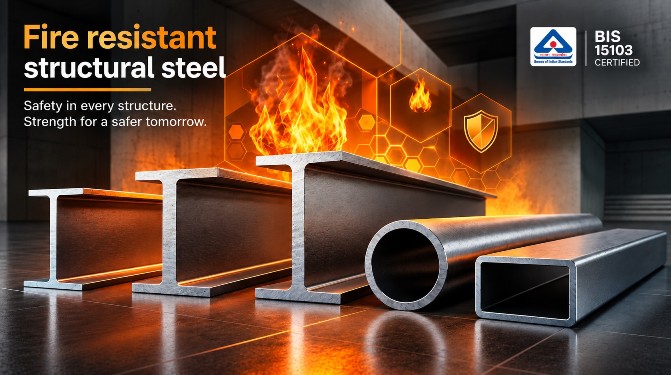
developed a hot-rolled, fire-resistant E350 structural steel aimed at enhancing
the safety and resilience of buildings and engineering structures during fire
incidents.
The new steel has
been certified by the Bureau of Indian Standards (BIS) under IS 15103, the
Indian standard for fire-resistant structural steel, marking an addition to
Tata Steel’s portfolio of value-added products for the construction and
infrastructure sectors.
The company said the
steel can retain two-thirds of its room-temperature yield strength at 600°C for
up to three hours. The enhanced strength retention is attributed to an advanced
alloy design involving an optimised combination of microalloying elements and
microstructural engineering.
“As fire safety assumes greater importance in
the design of modern infrastructure, material innovation is critical to
enhancing structural resilience. At Tata Steel, we are leveraging our expertise
in advanced materials and engineering to address such evolving needs,” said
Subodh Pandey, Vice-President — Technology, R&D, New Material Business, and
Graphene, Tata Steel.
The BIS-certified
product, he said, was designed to enhance structural safety while meeting the
performance requirements of modern construction.
According to Tata
Steel, the material’s ability to retain strength at elevated temperatures can
help structural members withstand fire for longer, potentially providing
additional time for occupants to evacuate buildings safely.
The steel can be used
in a range of fire-resistant structural applications, including structural
hollow tubes and sections used in pre-engineered buildings. The company said
the product could support the construction of structures designed for greater
resilience under fire conditions.
The development comes
as fire safety considerations gain increasing importance in the design and
construction of modern buildings, where the performance of structural materials
under extreme temperatures is a critical factor in maintaining structural
integrity.