
THEBUSINESSBYTES
BUREAU
BHUBANESWAR,
JULY 7, 2026
Stressing that
India's vast repository of tribal languages, dialects and indigenous knowledge
must be safeguarded for posterity, Union Tribal Affairs Minister Jual Oram on
Tuesday said Tribal Research Institutes (TRIs) have a pivotal role in
documenting tribal heritage and transforming it into a strong foundation for
policy, research and inclusive development. He made the remarks while
inaugurating the two-day National Workshop on Strengthening Tribal Research Institutes
in Bhubaneswar.
Organised by the
Ministry of Tribal Affairs in collaboration with the Odisha Government, the
national workshop has brought together nearly 200 participants, including
representatives of Tribal Research Institutes from across the country, State
Tribal Welfare Departments, academic and research institutions, technology
organisations, industry, development partners and civil society. The event
seeks to chart a comprehensive roadmap for transforming TRIs into vibrant
centres of knowledge, innovation, cultural preservation and evidence-based
policymaking.
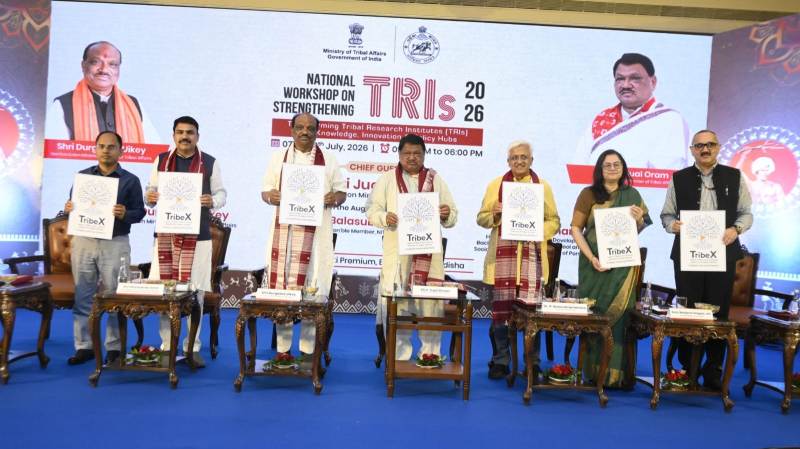
The inaugural session
was attended by Minister of State for Tribal Affairs Durgadas Uikey, NITI Ayog
Member R. Balasubramaniam, Odisha SC ST
Development Minister Nityananda Gond, Union Ministry of Tribal Affairs
Secretary Ranjana Chopra, Joint Secretary Anant Prakash Pandey, Odisha ST &
SC Development Department Commissioner-cum-Secretary B. Parmeshwaran and, along
with senior officials from the Centre and States.
Addressing the
gathering, Jual Oram said India's tribal communities possess an extraordinary
wealth of languages, oral traditions and indigenous knowledge that deserves
systematic preservation. He observed that while several tribal languages have
developed scripts, many dialects continue to survive only through oral
traditions, making documentation an urgent national responsibility.
"India's tribal
communities possess an extraordinary wealth of languages, dialects, oral
traditions and indigenous knowledge that must be preserved for future
generations. While several tribal languages have developed scripts, many
dialects survive primarily through oral tradition, making systematic
documentation an urgent national priority. Tribal Research Institutes have a
crucial responsibility to engage with communities, document their languages and
traditional knowledge, and share best practices across States," the Union
Minister said.
Highlighting the
Centre's vision for tribal development under the leadership of Prime Minister
Narendra Modi, Oram said the government is simultaneously working to preserve
tribal heritage while promoting socio-economic advancement through education,
healthcare, livelihoods and sustainable development. He said strengthening
Tribal Research Institutes forms an integral part of this broader vision by
creating institutions capable of generating research, supporting policymaking
and protecting India's rich tribal legacy.
A major highlight of
the inaugural session was the launch of TribeX, a first-of-its-kind digital
learning platform developed by the Ministry of Tribal Affairs to preserve and
promote India's tribal arts, culture, languages and traditional knowledge. The
platform features a Digital Academy offering free certificate programmes and
UGC-aligned diploma courses alongside a comprehensive Heritage Archive that
digitally preserves tribal literature, oral traditions and cultural practices.
To strengthen the
academic foundation of the initiative, the Ministry signed a Memorandum of
Understanding with Sampurnanand Sanskrit Vishwavidyalaya for jointly developing
UGC-recognised diploma programmes under TribeX covering tribal languages,
traditional knowledge systems, tribal arts, textiles and museology.
In another
significant step aimed at promoting economic empowerment, the Ministry entered
into an MoU with KIIT Technology Business Incubator to identify, incubate and
mentor tribal entrepreneurs through entrepreneurship development, capacity
building, market access and funding support.
Speaking on the
occasion, Minister of State for Tribal Affairs Durgadas Uikey said tribal
development has become central to India's vision of Viksit Bharat@2047 through
flagship initiatives such as PM JANMAN, Dharti Aaba Janjatiya Gram Utkarsh
Abhiyan and Eklavya Model Residential Schools. He emphasised that Tribal
Research Institutes must now broaden their research focus to include tribal
livelihoods, women empowerment, education, healthcare, nutrition, climate
resilience, digital inclusion and implementation of the Forest Rights Act so
that research findings directly contribute to improving the lives of tribal
communities.
NITI Aayog Member Dr.
R. Balasubramaniam underlined the need for TRIs to evolve beyond conventional
research institutions into policy think tanks, repositories of indigenous
knowledge and centres of excellence for innovation. He stressed that meaningful
research must reflect the lived experiences and wisdom of tribal communities
and said that even in the age of Artificial Intelligence, governance must
remain rooted in community realities.
Odisha Minister
Nityananda Gond called for strengthening Tribal Research Institutes as hubs of
policy innovation, digital knowledge and interdisciplinary research. He
advocated greater use of digital documentation, GIS-based mapping and
AI-enabled analytics while ensuring active participation of tribal communities
in research and knowledge creation.
Secretary, Ministry
of Tribal Affairs, Ranjana Chopra observed that while tribal development has
traditionally focused on infrastructure, education and healthcare, equal
importance must now be given to institutions that preserve tribal heritage,
protect constitutional rights and generate evidence for informed policymaking.
She said the workshop provides an important platform for TRIs across the
country to exchange experiences, identify challenges and recommend reforms that
will guide the Ministry in developing a comprehensive roadmap for institutional
transformation.
Welcoming the
delegates, Odisha ST & SC Development Department Commissioner-cum-Secretary
B. Parmeshwaran highlighted Odisha's rich tribal heritage and the State
Government's sustained efforts towards tribal welfare. He expressed confidence
that the deliberations would produce valuable recommendations for strengthening
Tribal Research Institutes nationwide.
The first day's
technical sessions featured presentations by Tribal Research Institutes from
different States showcasing their achievements, best practices and
institutional challenges. Detailed discussions also focused on enhancing the
role of TRIs in evidence-based policymaking and research.
Participants later deliberated in four thematic breakout sessions covering Tribal Research Institutes as Knowledge and Cultural Resource Centres; Research, Documentation and Evidence Generation for Tribal Development; Technology Integration through GIS, Artificial Intelligence and Innovation; and Institutional Strengthening, Human Resources, Governance and Partnerships.
The recommendations emerging from these thematic groups will be consolidated on the second day of the workshop. The event will conclude with expert panel discussions on institutional reforms, digital transformation and research ecosystems, culminating in the adoption of the Bhubaneswar Declaration, which is expected to outline a shared national roadmap for strengthening Tribal Research Institutes and advancing inclusive tribal development across India.