THEBUSINESSBYTES BUREAU
AHMEDABAD, FEBRUARY 19, 2026
The Entrepreneurship Development Institute of India (EDII), Ahmedabad, in
collaboration with HSBC, hosted a major handloom showcase under the HandMade in
India initiative on Thursday, bringing together policymakers, industry leaders,
designers and artisan groups on a single platform. The event combined a
high-level industry roundtable with a curated fashion presentation to highlight
the sector’s cultural significance, market potential and the need for stronger
quality standards, branding strategies and sustainable livelihood opportunities
for handloom communities across the country.
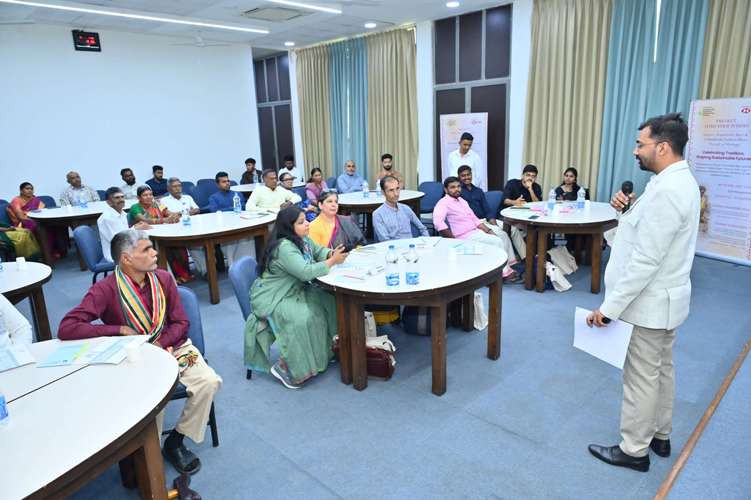
A key highlight of the programme was the Industry Round Table Meet on
‘Quality Assurance and Brand Building in India’s Handloom Sector.’ The
roundtable served as a collaborative platform for dialogue and knowledge
exchange among stakeholders from industry, academia, government and grassroots
enterprises. Discussions focused on improving quality benchmarks, strengthening
brand positioning, enhancing market competitiveness and building sustainable
value chains that can ensure long-term and resilient livelihoods for artisan
communities.
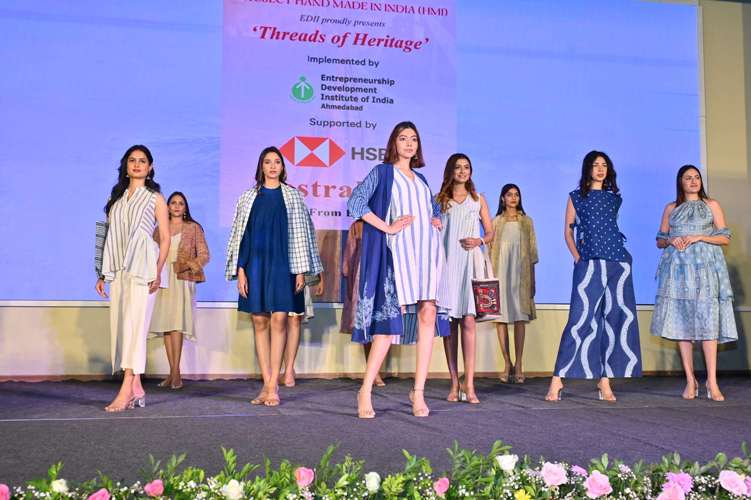 The event also featured a curated handloom fashion presentation titled
‘Threads of Heritage,’ organised under the HandMade in India initiative. The
show traced the evolution of handloom from its traditional roots to
contemporary design expressions, showcasing sustainable collections created by
weavers from Bhuj in Gujarat and Erode in Tamil Nadu. Through two thematic
sequences, ‘Heritage Hues: Handloom Revival’ and ‘Handloom: The Original
Sustainable Fashion,’ the presentation highlighted traditional weaving
techniques, natural dyes, eco-friendly materials and modern design interpretations,
demonstrating how heritage crafts continue to adapt to present-day markets and
responsible fashion narratives.
The event also featured a curated handloom fashion presentation titled
‘Threads of Heritage,’ organised under the HandMade in India initiative. The
show traced the evolution of handloom from its traditional roots to
contemporary design expressions, showcasing sustainable collections created by
weavers from Bhuj in Gujarat and Erode in Tamil Nadu. Through two thematic
sequences, ‘Heritage Hues: Handloom Revival’ and ‘Handloom: The Original
Sustainable Fashion,’ the presentation highlighted traditional weaving
techniques, natural dyes, eco-friendly materials and modern design interpretations,
demonstrating how heritage crafts continue to adapt to present-day markets and
responsible fashion narratives.
Speaking on the occasion, Ashish Tripathi, CEO & Head, HSBC IBU,
said, “HSBC is glad to be associating with EDII on this highly significant
project which directly aimed at addressing the unorganised and dispersed nature
of the handloom sector, so that its inherent strengths could be honed and
tapped to attain unparalleled growth. Hearteningly, the artisans have learnt
best practices and the ways of turning their businesses into profit-making,
growth-oriented enterprises.”
Commenting on the initiative, Dr. Sunil Shukla, Director General, EDII,
said, “We are committed to strengthening artisan livelihoods with
entrepreneurship development practices. Through the HandMade in India project,
we are working with handloom communities across India to strengthen their
skills, sustainability practices and market opportunities. Today’s fashion show
reflects the outcomes of this effort, demonstrating how traditional handlooms
can adapt to modern lifestyles while continuing to support sustainable
livelihoods. It is time that the remarkable craftsmanship of our artisan
clusters from Bhuj and Erode received wider public recognition.”
Expressing his views, Dr. Raman Gujral, Project Director, HandMade in India and Director, Department of CSR Partnerships, EDII, said, “India’s handloom is not just about textiles — it represents our heritage, our identity, and the livelihoods of millions of artisan families. At the same time, we know that today’s markets are changing rapidly, and expectations around quality, consistency and branding are higher than ever before. The HandMade in India project has addressed these dimensions and worked to bridge the gap between markets, products and artisans.”
The initiative seeks to promote sustainable livelihoods, preserve traditional knowledge systems and strengthen market linkages for artisan communities, while reinforcing the economic and cultural relevance of India’s handloom sector in a rapidly evolving global marketplace.