
THEBUSINESSBYTES
BUREAU
BHUBANESWAR,
MAY 18, 2026
Dengue is no longer a
seasonal illness but an evolving public health challenge demanding year-round
preparedness. Experts noted that shifting epidemiological trends, rapid
urbanisation, climate variability, international travel and enhanced vector
adaptability are significantly expanding dengue transmission zones worldwide.
India remains highly vulnerable due to its climatic conditions and population
density, underscoring the need for robust surveillance systems, early outbreak
detection and stronger public health interventions.
In observance of
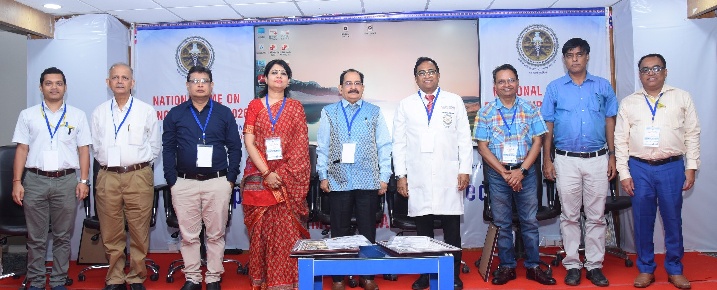
National Dengue Day 2026, the Department of General Medicine, AIIMS Bhubaneswar
organised the National CME on “Dengue Update 2026: Clinical Insight &
Public Health Perspectives,” bringing together leading clinicians,
epidemiologists, public health experts and academicians for in-depth scientific
discussions on dengue prevention, diagnosis, treatment and control strategies.
The CME aligned with
the National Dengue Day 2026 theme, emphasising community participation in
dengue control through the message: “Check, Clean and Cover.”
The programme was
held under the patronage of Prof. (Dr.) Ashutosh Biswas, Executive Director and
CEO, AIIMS Bhubaneswar, a distinguished academician and clinician. Prof. Biswas
stressed the urgent need for integrated approaches involving clinicians,
epidemiologists, researchers, administrators and the community to address the
rising dengue burden in India.
“Dengue continues to pose a major public
health challenge due to the absence of definitive antiviral therapy and the
unpredictability of severe disease progression,” said Dr. Biswas. He
highlighted the importance of timely diagnosis, standardised treatment protocols
and capacity building among healthcare professionals. “Institutions like AIIMS
Bhubaneswar have a critical role in integrating clinical excellence with public
health awareness and translational research,” he added.
The event was guided
by Co-Patrons Dr. Dillip Kumar Parida, Dean (Academics), and Dr. Prabhas Ranjan
Tripathy, Medical Superintendent, AIIMS Bhubaneswar.
The CME was
spearheaded by Dr. Rashmi Ranjan Mohanty, Professor, Department of Medicine,
AIIMS Bhubaneswar, who served as Organizing Chairperson. Dr. Mohanty emphasised
that continuous medical education is vital for clinicians to stay updated on
evolving diagnostic and management protocols in dengue care.
Programme
coordination and scientific execution were efficiently managed by Dr. Debananda
Sahoo, Associate Professor, Department of Medicine, AIIMS Bhubaneswar, who
served as Organizing Secretary.
The inauguration was
graced by Dr. A. P. Dash, former Regional Advisor to the World Health
Organization. A globally respected epidemiologist and vector-borne disease
expert, Dr. Dash delivered a detailed address on the global dengue scenario,
highlighting changing epidemiology, emerging severe disease patterns and
growing international concern over arboviral infections.
Dr. Sanghamitra Pati,
Director, RMRC Bhubaneswar and ADG, ICMR, delivered an insightful address on
strengthening surveillance systems, translational research and
community-focused healthcare strategies to combat vector-borne diseases like
dengue. She emphasised evidence-based policymaking, interdisciplinary
collaboration and public health preparedness.
Dr. Shubhashisha
Mohanty, Additional Director of Health Services and State Programme Officer, NVBDCP,
presented detailed insights into the changing epidemiology and burden of dengue
in India, with special focus on Odisha and eastern India.
The CME also featured
an engaging panel discussion on practical challenges in dengue management,
outbreak preparedness, differential diagnosis, community interventions and
strengthening hospital response systems. Experts highlighted the importance of
climate-sensitive surveillance, stronger primary healthcare systems, enhanced
laboratory capacity and interdisciplinary research collaboration.
An important
component of the observance was a public awareness programme held at the OPD
foyer of AIIMS Bhubaneswar. Faculty members, resident doctors, nursing officers
and healthcare workers interacted with patients and attendants to educate them
on dengue symptoms, warning signs requiring hospital care and preventive
measures against mosquito breeding.
The campaign stressed
environmental sanitation, safe water storage and community-level vector
control. Educational leaflets were distributed to raise awareness on Aedes
mosquito breeding habits, personal protection and early healthcare-seeking
behaviour.
Throughout the sessions, speakers reiterated that inappropriate self-medication, delayed diagnosis and lack of awareness continue to drive severe dengue outcomes. Experts emphasised evidence-based treatment, adherence to national guidelines and stronger referral systems for critically ill patients.
The deliberations further underscored the importance of research on emerging dengue serotypes, immune responses, vaccine development and vector ecology. Speakers also highlighted the growing role of digital surveillance systems, predictive modelling and integrated vector management in preventing outbreaks.