THEBUSINESSBYTES
BUREAU
BHUBANESWAR,
JUNE 15, 2026
Directing all
departments to undertake advance planning and coordinated action to ensure
uninterrupted agricultural operations and adequate water availability across
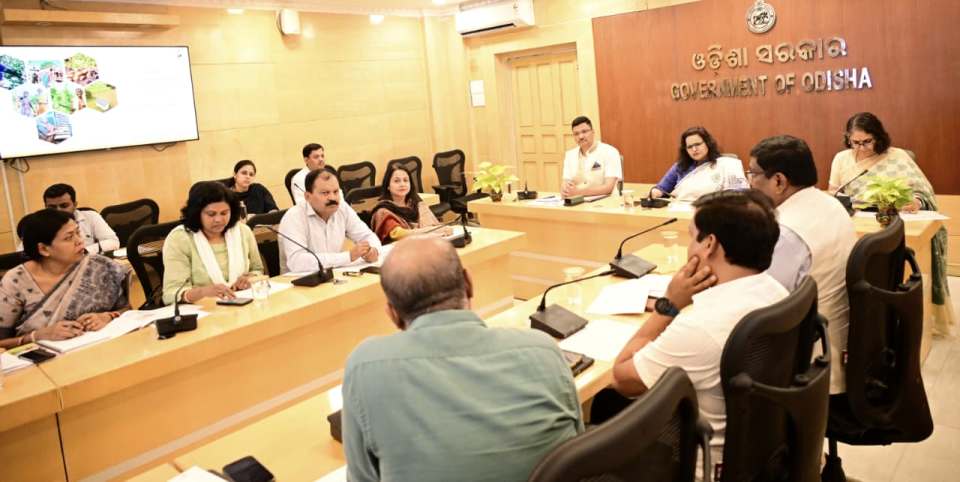
the state, Odisha Chief Secretary Anu Garg on Monday reviewed the state’s
preparedness for the Kharif crop season 2026 and assessed the potential impact
of El Niño conditions.
The high-level review
meeting, held at Lok Seva Bhawan, examined the progress of southwest monsoon
rainfall, seasonal forecasts and contingency measures to mitigate any adverse
effects that may arise from El Niño. Senior officials from key departments,
including Revenue and Disaster Management, Water Resources, Agriculture and
Farmers’ Empowerment, Cooperation, and representatives from the India
Meteorological Department (IMD) and Odisha University of Agriculture and Technology,
participated in the discussions.
According to the IMD,
the monsoon has already advanced into parts of coastal Odisha and weather
conditions remain favourable for its further progress across the state. While
El Niño may contribute to slightly below-normal rainfall at the national level
this year, historical assessments indicate that Odisha is unlikely to face any
significant adverse impact. Officials informed the meeting that rainfall in the
state could remain normal, slightly below normal or even above normal despite
prevailing El Niño conditions.
Emphasising the need
for preparedness under all possible scenarios, Garg directed departments to
continuously monitor rainfall patterns, reservoir storage levels, agricultural
activities and water resources while implementing advance contingency plans.
To strengthen water
security and irrigation management, the state government has decided to
constitute a special Task Force Committee for regular review of irrigation and
water management programmes. The committee will focus on ensuring water
availability, enhancing irrigation potential, planning for both Kharif and Rabi
seasons, and promoting efficient water use among farmers. The Water Resources
Department will act as the nodal agency.
The meeting also
reviewed initiatives related to water conservation, micro-irrigation and
scientific management of water bodies. Presenting the Agriculture Department’s
preparedness roadmap, Commissioner-cum-Secretary Sachin Ramchandra Yadav
informed that Odisha has set a cultivation target of 57.88 lakh hectares during
Kharif 2026, with irrigation coverage planned for 39.04 lakh hectares.
To support farmers,
the state has planned the distribution of 2,66,780 quintals of seeds, of which
over 1,18,787 quintals have already been supplied. An additional 14,350
quintals of seeds have been kept in reserve to meet emergency requirements.
Weekly district-level review meetings are also being conducted to closely
monitor Kharif preparations.
The Cooperation
Department informed that Odisha requires 11.43 lakh metric tonnes of fertiliser
during the current Kharif season and that adequate stocks are available across
districts. Vigilance teams have been deployed at district and block levels to
prevent irregularities in fertiliser distribution, while regular monitoring
mechanisms have been put in place to ensure uninterrupted supplies.
Officials further stated that nearly 25 lakh farmers are expected to be covered under the Pradhan Mantri Fasal Bima Yojana (PMFBY) during the season.
The Chief Secretary also directed departments and district administrations to strengthen pest and disease management measures in the event of deficient rainfall. Stressing the importance of sustainable water management, she called for intensified efforts towards groundwater recharge and greater public awareness in regions witnessing excessive groundwater extraction, underscoring the state’s commitment to safeguarding agricultural productivity and farmer welfare during the upcoming crop season.