
THEBUSINESSBYTES
BUREAU
BHUBANESWAR/GANJAM,
JUNE 17, 2026
“ECRICC reflects the kind of integrated,
community-driven solutions that are essential for building long-term climate
resilience,” observed Green Climate Fund (GCF) Regional Manager for East and
South Asia, Diane Jegam, during a field review of the Enhancing Climate
Resilience of India’s Coastal Communities (ECRICC) project in Odisha’s Ganjam
district. The visit underscored the project’s growing impact in restoring
fragile coastal ecosystems while creating sustainable, climate-resilient
livelihood opportunities for vulnerable communities across the state’s
coastline.
A delegation from the
Green Climate Fund (GCF) visited Ganjam district to review the progress of the
ECRICC project. The mission toured interventions across the Chilika–Ganjam and
Bahuda landscapes to assess how ecosystem restoration and climate-resilient
livelihood initiatives are enhancing the adaptive capacity of vulnerable
coastal communities.
The visiting delegation
comprised Diane Jegam, Regional Manager, East and South Asia, Green Climate
Fund, and Dr. Bapon Fakhruddin, Principal Climate Investment Specialist, Green
Climate Fund. During the visit, the delegation met Prem Kumar Jha, State
Project Director, ECRICC Odisha and Principal Chief Conservator of Forests
(Wildlife), to discuss the progress and implementation of the project in the
state.
Speaking on the
occasion, Prem Kumar Jha, State Project Director, ECRICC, said, “Odisha’s
coastline is increasingly vulnerable to the impacts of climate change,
including cyclones, tidal surges, coastal erosion and flooding. At the same
time, it presents significant opportunities to strengthen resilience through
ecosystem restoration and community-led adaptation. Through ECRICC, we are
supporting vulnerable coastal communities across Ganjam, Puri, Kendrapara and
Balasore. We are pleased to welcome the Green Climate Fund delegation to
witness these efforts first-hand on the ground.”
The delegation
reviewed several field interventions implemented under the project, including
backyard ornamental fisheries units, seagrass restoration, mangrove
plantations, seaweed farming and grow-out crab culture. A key highlight of the
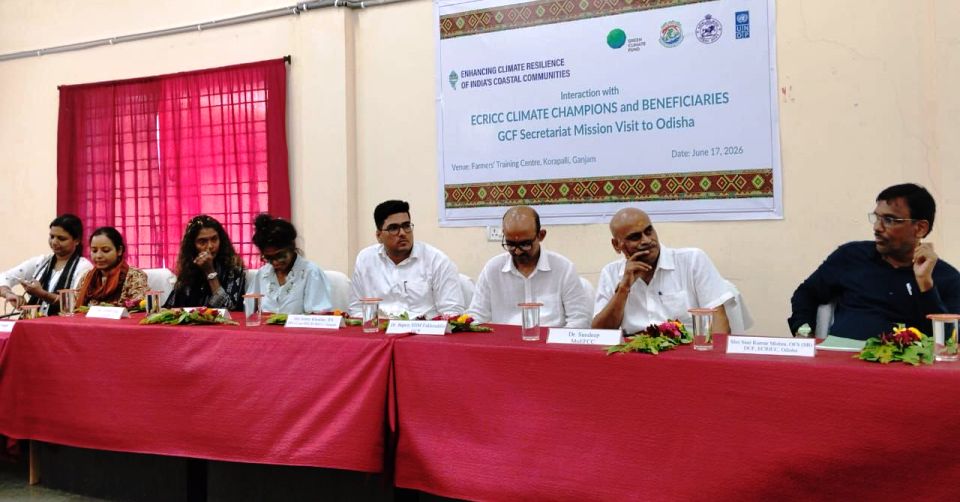
visit was an interaction with Climate Champions—grassroots leaders identified
and nurtured under the ECRICC project to promote climate-resilient practices
within their communities.
“ECRICC reflects the kind of integrated,
community-driven solutions that are essential for building long-term climate
resilience. By aligning ecosystem restoration with sustainable livelihoods, the
project is not only reducing vulnerability but also creating pathways for
inclusive and scalable adaptation across coastal regions,” said Jegam.
In Ganjam, the ECRICC
project spans four blocks, 40 Gram Panchayats and 191 villages, benefiting
around 50,000 households, including 5,000 direct beneficiaries mobilised
through 250 Self-Help Groups (SHGs).
Sunny Khokhar, Divisional Forest Officer, Brahmapur Forest Division-cum-Nodal Officer, ECRICC Project, Ganjam, who accompanied the delegation, said, “Across the Chilika–Ganjam and Bahuda landscapes, ECRICC is restoring critical coastal ecosystems through interventions such as mangrove and seagrass restoration, seaweed farming, System of Rice Intensification, grow-out crab culture and backyard ornamental fisheries, while creating sustainable livelihood opportunities for local communities. The contribution of our Climate Champions is equally important, as they mobilise communities, foster local ownership and drive climate adaptation efforts at the grassroots.”
Among others, Dr. Sundeep, National Project Coordinator, ECRICC; Sisir Kumar Mishra, Deputy Conservator of Forest, ECRICC; Amlan Nayak, DFO, Chilika; and Aishath Azza, Regional Technical Specialist–Climate Change Adaptation, UNDP Bangkok Regional Hub, along with officials from the State and District Project Management Units, were present during the visit.