
THEBUSINESSBYTES
BUREAU
NEW
DELHI, OCTOBER 8, 2026
The GST Council on
Thursday recommended a sweeping set of reforms aimed at making the indirect tax
regime more business-friendly, including complete withdrawal of arrest powers
under GST, raising the prosecution threshold from ₹1 crore to ₹5 crore and cutting the
maximum general penalty from ₹25,000 to ₹10,000.
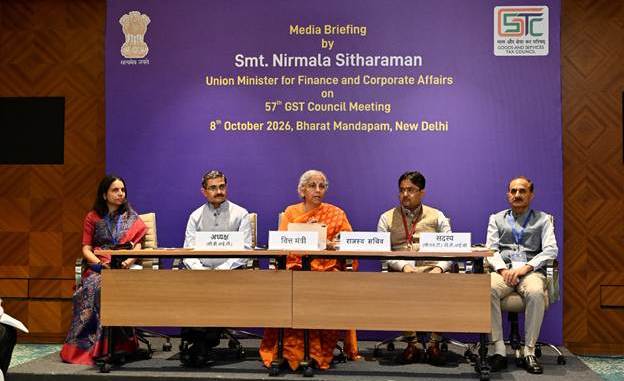
At its 57th meeting
chaired by Union Finance Minister Nirmala Sitharaman, the Council focused
largely on process reforms covering registration, returns, refunds and
adjudication, besides measures to improve input tax credit, facilitate exports
and streamline movement of goods.
In a significant move
aimed at strengthening a trust-based tax regime, the Council recommended
omission of Section 69 of the CGST Act, effectively withdrawing arrest powers
under GST. It also proposed raising the monetary threshold for prosecution from
₹1 crore to ₹5 crore and
rationalising provisions relating to offences and punishment.
The Council
recommended reducing the maximum general penalty under Section 125 from ₹25,000 to ₹10,000. It also proposed
a minimum threshold of ₹10,000 for issuance of show cause notices, along with a
reduced penalty of 5 per cent in specified non-fraud cases where tax and
interest
are paid within the prescribed period.
Businesses are also
set to benefit from faster and more automated refunds. The Council proposed
automatic sanction of full refunds of excess balances in electronic cash
ledgers and automatic provisional sanction of 90 per cent of eligible claims
relating to zero-rated supplies and inverted duty structures, based on
system-led risk assessment. The acknowledgement or deficiency memo timeline is
proposed to be reduced from 15 days to 10 days.
The measures are
expected to improve cash flows by reducing manual intervention and accelerating
eligible refunds. The Council also recommended removing the requirement to
upload scanned documents for certain refund claims and widening the scope of
refunds of accumulated input tax credit on capital goods and input services.
On input tax credit,
the Council proposed removing several restrictions, including those relating to
outdoor catering, health and life insurance, telecommunication towers,
pipelines outside factory premises, free samples and goods destroyed or written
off as required by law.
To ease compliance,
registration applications will get clearer document requirements, drop-down
options and a more user-friendly portal interface. The Council also recommended
automatic acceptance of most registration amendments and a system-based
mechanism for cancellation and revocation, reducing taxpayer interaction with
officers.
Small sellers on
e-commerce platforms received a further boost, with the Council recommending a
simplified registration mechanism allowing eligible suppliers to operate in
states where they have no physical presence by declaring an e-commerce
operator's warehouse as their principal place of business.
The Council also
proposed intelligence-based interception of goods in transit, requiring
specific intelligence and authorisation by an officer not below the rank of
Joint Commissioner. Transit-state interceptions would generally be barred where
the supplier or recipient is located or registered in another state, subject to
specified exceptions.
For exporters, the
Council recommended changes to facilitate zero-rating of services supplied
through foreign offices or branches and other export-related transactions. It
also proposed measures to provide greater certainty for supplies to overseas
buyers delivered through SEZs or free trade warehousing zones.
In another major
relief for smaller businesses, the Council approved in principle an optional
Annual Return Quarterly Payment scheme for taxpayers with turnover of up to ₹5 crore who exclusively undertake
B2C supplies. It also recommended waiver of late fees
for eligible small taxpayers if delayed returns are filed within the month in
which they were due.
The Council further
recommended an optional mechanism to simplify compliance for small
consumer-facing businesses with turnover up to ₹5 crore, alongside measures to reduce
mismatches between returns and input tax credit. The proposed revised return
mechanism is recommended for implementation from the April 2027 return period,
subject to consultation.
The
57th meeting follows the previous round of GST reforms focused on rate
rationalisation and reduction. The latest recommendations shift the emphasis
towards simplifying procedures, reducing litigation and improving ease of doing
business under GST.