
THEBUSINESSBYTES
BUREAU
BHUBANESWAR,
OCTOBER 8, 2026
The Odisha State
Pollution Control Board (OSPCB) on Thursday unveiled an ambitious
technology-driven roadmap for environmental protection, with plans to establish
a state-of-the-art command-and-control centre, deploy robotic systems for
water-quality assessment and transform its coastal ecosystem facility at
Paradeep into a Centre of Excellence.
The decisions were
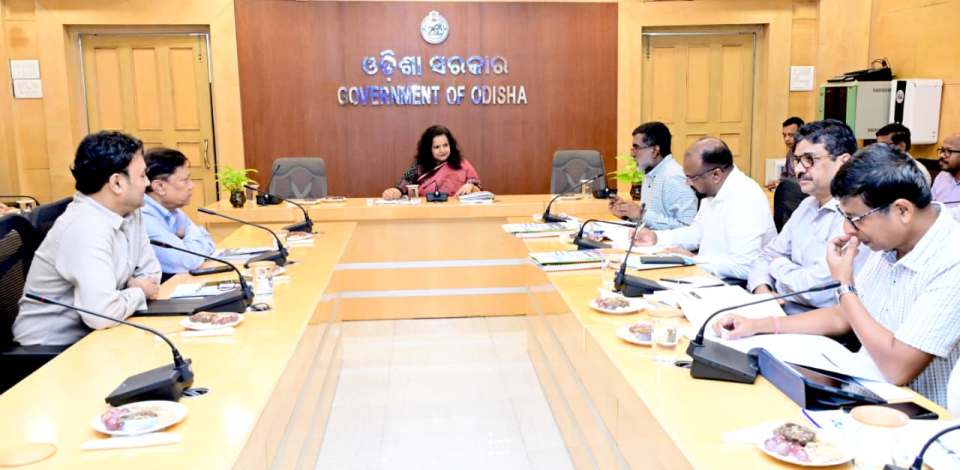
taken at the 135th meeting of the OSPCB board held at Lok Seva Bhawan here,
chaired by Chief Secretary Anu Garg and attended by Member Secretary Manoj V
Nair and senior officials.
Emphasising the need
to modernise environmental governance, Garg said the Centre for Management of
Coastal Ecosystem (CMCE) at Paradeep should evolve beyond a conventional
laboratory into an integrated hub of science, data and technology dedicated to
protecting Odisha's coastal environment.
As part of efforts to
strengthen real-time monitoring and enforcement, the board decided to establish
a modern Command-and-Control Centre at the OSPCB headquarters in Nayapalli,
Bhubaneswar.
The proposed centre
will integrate field information, water sample analyses and laboratory data to
facilitate faster assessment and decision-making on pollution-related issues.
The pollution control
board will also deploy advanced robotic technology to assess water quality in
rivers, ponds, estuaries and coastal waters, while drones will be used for
comprehensive field surveillance, according to the decisions taken at the
meeting.
The board also
approved plans for new regional office buildings at Cuttack, Jharsuguda,
Koraput, Kalinganagar, Bhubaneswar, Keonjhar and Sambalpur. The proposed
buildings will incorporate green features such as solar power, rainwater
harvesting and vermicomposting.
Turning its attention
to industrial sustainability, the OSPCB proposed creation of an Odisha Fly Ash
Atlas that will provide an integrated picture of fly ash generation,
availability and demand across the state.
Research initiatives
focusing on the bio-stabilisation and bio-transformation of fly ash will also
be undertaken in collaboration with premier academic institutions, with the aim
of converting industrial waste into useful resources, including for sustainable
agricultural applications.
The board also
stressed the need to strengthen public participation in environmental
governance. Garg called for citizen annual reports to be made simpler, highly
visual and data-driven so that people can easily understand the state's
environmental performance.
To promote environmental awareness among younger generations, the OSPCB will distribute interactive comic books and e-comic books among school and college students.
Concluding the meeting, Garg said the OSPCB must emerge as a true symbol of care and responsibility towards the environment and stressed the need for coordinated efforts to build a transparent, scientific and citizen-centric governance framework.