THEBUSINESSBYTES
BUREAU
NEW
DELHI, OCTOBER 8, 2026
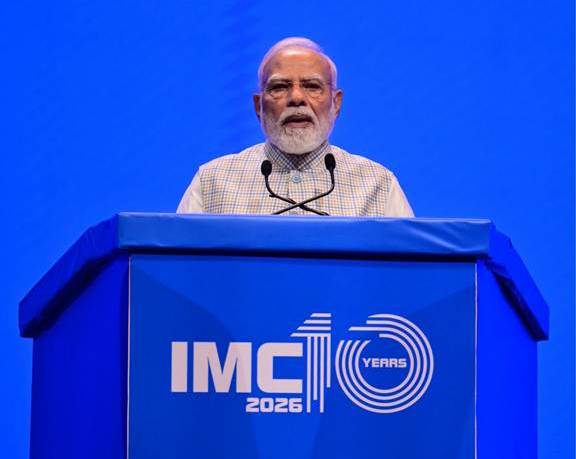
India has transformed
from being a consumer of technology to a creator and is now moving towards
designing products and developing intellectual property domestically, Prime
Minister Narendra Modi said on Thursday, as he inaugurated the 10th edition of
India Mobile Congress here.
Addressing the
telecom and technology industry at Yashobhoomi, Modi said the country’s telecom
sector had undergone a major transformation, with 5G reaching every district
and the number of 5G base stations touching 5.5 lakh.
“Over the years, India has transformed from
being a consumer to a creator. Now, the country is moving towards a stage where
product design will also take place in India. The technology and intellectual
property behind these products will also be Indian,” Modi said.
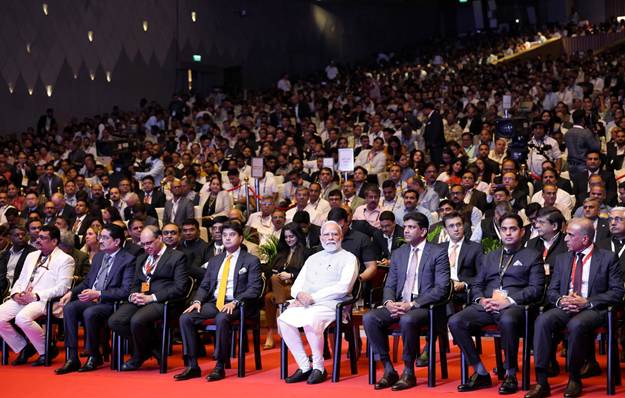 The Prime Minister
said the government was providing incentives and implementing reforms to
accelerate this transition, describing the changes in the telecom sector as
part of the country’s “Reform Express”.
The Prime Minister
said the government was providing incentives and implementing reforms to
accelerate this transition, describing the changes in the telecom sector as
part of the country’s “Reform Express”.
Modi also highlighted
the impact of digital connectivity on citizens, saying hundreds of government
services were now available through mobile phones and government assistance was
reaching beneficiaries directly through bank accounts.
Through Direct
Benefit Transfer, nearly Rs 50 lakh crore has been transferred directly to
beneficiaries, while nearly Rs 5 lakh crore had been prevented from reaching
the wrong hands, he said.
The Prime Minister
recalled that India launched 5G from the India Mobile Congress platform in 2022
and subsequently moved from 5G rollout to “5G reachout”.
“Today, India has 5,50,000 5G Base Stations
and mobile internet speed from 2022, has increased by 10 times,” he said.
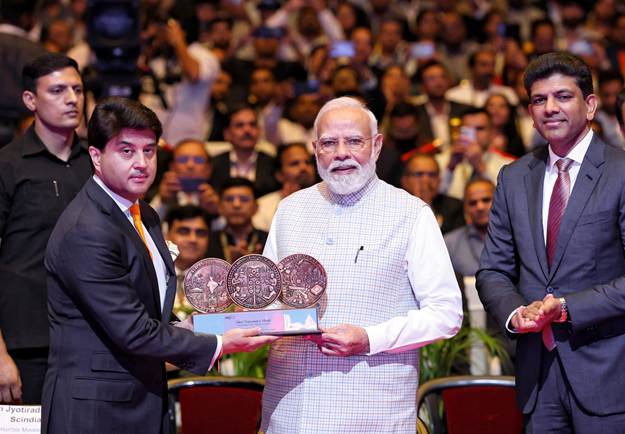 Union Communications
Minister Jyotiraditya M Scindia said India’s telecom ecosystem had expanded
sharply over the past decade, with more than 1.35 billion telecom subscribers
and over 1.09 billion broadband connections.
Union Communications
Minister Jyotiraditya M Scindia said India’s telecom ecosystem had expanded
sharply over the past decade, with more than 1.35 billion telecom subscribers
and over 1.09 billion broadband connections.
When IMC was launched
in 2017 with the theme “Connecting the Next Billion”, the country’s average
monthly data consumption stood at 0.26 GB. It has now crossed 36 GB, while data
costs have fallen 97 per cent, Scindia said.
Since the launch of
5G in October 2022, India’s rollout has reached 550 million users across 99.9
per cent of the country’s districts, he said.
“Our aim now is clear: to connect 1 billion 5G
users by 2030 and lead the next era of global digital innovation,” Scindia
said.
He also said the cost
of one GB of data had declined from Rs 268 in 2014 to just Rs 8 currently.
The 10th edition of
IMC, being organised jointly by the Department of Telecommunications and the
Cellular Operators Association of India, is being held under the theme “Scale
Without Boundaries”.
The event seeks to
take innovations from laboratories and pilot projects to widespread deployment
and real-world applications, with a focus on innovation, investment, inclusion
and trust.
Scindia said IMC 2026
would showcase technologies spanning satellite connectivity, cell broadcast,
AI-native pre-6G networks, sovereign cloud, terahertz communications and
integrated sensing and communication.
The four key pillars
of the event are “Srishti” for building the future, “Samvardhan” for fuelling
growth, “Sashakt” for expanding opportunities and “Suraksha” for strengthening
trust.
The event has drawn
participation from more than 100 countries and brings together policymakers,
telecom operators, technology companies, startups, investors, academia and
international stakeholders.
According to
pre-event projections by the Department of Telecommunications, IMC 2026 is
expected to attract over 1.5 lakh attendees, more than 500 exhibitors and
partners, over 600 startups, 900-plus thought leaders and more than 2,000
technology use cases.
The event is also
projected to host over 120 sessions and around 700 investor meetings.
The Department of Telecommunications is showcasing indigenous telecom capabilities through its pavilion, centred on the “Samridh Gram” initiative, while citizen-focused initiatives such as Sanchar Saathi and the Financial Fraud Risk Indicator are also being highlighted.
The government said the event would strengthen collaboration among industry, academia, startups, investors and policymakers and support the development of technologies for domestic as well as international markets.