
THEBUSINESSBYTES
BUREAU
BHUBANESWAR,
JUNE 8, 2026
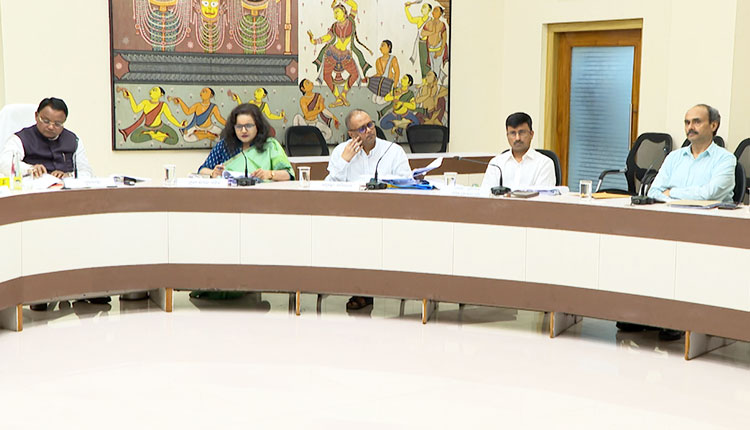
In one of its most ambitious development drives in recent years, the Odisha Cabinet chaired by Chief Minister Mohan Charan Majhi at Lok Seva Bhawan on Monday approved a series of transformative projects and policy reforms spanning tourism, industrial infrastructure, urban development, irrigation, housing and water management, with a cumulative investment running into several thousand crore rupees.
A major highlight of
the Cabinet decisions was the approval of a ₹210.36-crore Women Workers’ Hostel at the Kalibeti
Industrial Area in Khordha district. To be developed by
the Industrial Infrastructure Development Corporation of Odisha (IDCO) under
the Scheme for Assistance to States for Capital Investment (SASCI), the
facility will accommodate around 4,000 women workers and provide integrated
residential, social and community infrastructure. The initiative is expected to
support Odisha’s fast-growing textile and apparel sector, where women
constitute a significant portion of the workforce. Kalibeti Industrial Estate,
home to leading investors such as MAS Holdings, EPIC and Indian Stitches, is
projected to generate over 20,000 jobs in the coming years.
In a landmark move
towards sustainable urban transformation, the Cabinet also approved the ₹500-crore Waterfront Development
Scheme to be implemented over five years. The programme aims to
rejuvenate riverfronts and urban water bodies across selected cities, creating
environmentally sustainable, accessible and people-friendly public spaces.
Besides restoring ecological balance and improving urban livability, the
initiative is expected to promote tourism, cultural activities, local economic
development and climate resilience through improved flood management and
adaptive infrastructure.
Addressing concerns
over urban water pollution, the Cabinet approved a ₹100.89-crore
wastewater treatment project at the confluence of River Daya and Gangua Nallah
in Bhubaneswar. To be executed by WATCO, the project includes a 60 MLD Sewage
Treatment Plant based on Sequential Batch Reactor technology, pumping
infrastructure, automation systems and dedicated power supply facilities. The
project is expected to significantly reduce pollution in River Daya, improve
water quality and strengthen the city’s sanitation infrastructure when
completed in 2028.
Further strengthening
urban infrastructure, the Cabinet cleared a ₹112.31-crore 24×7 Water Supply Project for Bhubaneswar
Development Authority’s Town Planning Schemes TP-1, TP-2 and TP-3. The project
will establish a modern water distribution network, including elevated storage
reservoirs,
gravity mains and advanced SCADA systems, ensuring uninterrupted and equitable
water supply to rapidly developing urban areas.
In a major relief for
low-income urban households, the Cabinet approved a sharp reduction in stamp
duty and registration fees for Economically Weaker Section (EWS) housing units
under Pradhan Mantri Awas Yojana-Urban 2.0 and other state housing schemes.
Charges that currently range between 6 and 7 per cent will now be reduced to
just 0.6 to 0.7 per cent for dwelling units up to 60 square metres,
substantially lowering the cost burden on beneficiaries and accelerating
affordable housing uptake.
The Cabinet also
sanctioned ₹440.33
crore for the construction of a new In-Stream Storage Structure across the
Mahanadi River near Sambalpur to replace the ageing Ayodhya
Sagar weir. The bridge-cum-barrage project, which includes five years of
operation and maintenance, is expected to ensure reliable drinking water
supply, improve groundwater recharge, support fisheries and livestock activities,
and boost tourism and cultural development around the Samaleswari Temple
region.
Tourism received a
major boost with the approval of the “Land Bank for Hospitality Infrastructure”
scheme. Under the ambitious programme, approximately 5,500 acres of government
and private land will be developed across key destinations including Chilika,
Konark, Puri, Dhauli, Hirakud, Satkosia, Similipal, Bhitarkanika, Daringbadi
and Deomali. The scheme, carrying a total outlay of ₹1,500 crore over five years, seeks
to provide investment-ready land for hotels, resorts, convention centres,
wellness retreats and eco-tourism projects. The government expects the
initiative to attract substantial private investment, generate employment and
position Odisha among Asia’s leading tourism destinations.
In the irrigation
sector, the Cabinet approved a ₹194.07-crore
tender for construction of the spillway of the Brutang Irrigation Project in
Nayagarh district. The project, Odisha’s 11th major irrigation scheme, aims to
create irrigation
potential for 23,300 hectares and provide assured water supply to 309 villages
across Dasapalla, Nuagaon, Nayagarh, Khandapada and Odagaon blocks,
significantly improving agricultural productivity and rural livelihoods.
Collectively, the
Cabinet decisions reflect the state government’s strategy of balancing
industrial expansion, infrastructure creation, environmental sustainability,
tourism-led growth and social welfare. The approvals are expected to strengthen
Odisha’s investment ecosystem, enhance urban and rural infrastructure, generate
employment opportunities and improve quality of life across the state,
reinforcing its vision of becoming a leading destination for industry, tourism
and inclusive development.