
THEBUSINESSBYTES BUREAU
BHUBANESWAR, MAY 25, 2026
In a decisive move to ensure
transparent, farmer-friendly, and leak-proof paddy procurement operations, the
Odisha Government on Monday finalized the operational guidelines and
administrative framework for procurement of the Rabi crop under Kharif
Marketing Season (KMS) 2025-26. The high-level Inter-Ministerial Committee
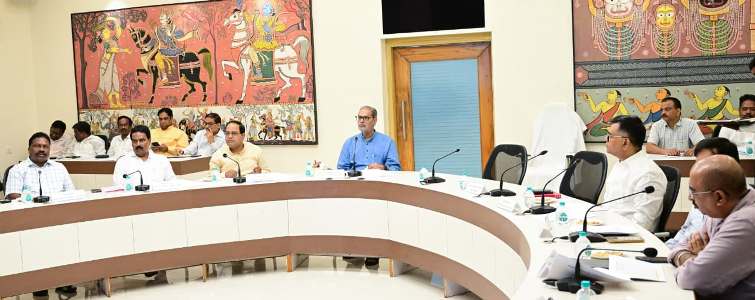
meeting, chaired by Deputy Chief Minister Kanak Vardhan Singh Deo, laid strong
emphasis on safeguarding the interests of small and marginal farmers while
tightening enforcement against irregularities in the procurement system.
The meeting witnessed participation from Revenue & Disaster
Management Minister Suresh Pujari, Food Supplies & Consumer Welfare
Minister Krushna Chandra Patra, Cooperation Minister Pradeep Bal Samanta, and
Panchayati Raj Minister Rabi Narayan Naik, along with senior officials from key
departments.
Addressing the committee, Deputy Chief Minister Singh Deo stressed that
special emphasis must be placed on protecting the interests of small and
marginal farmers, ensuring that genuine cultivators receive seamless access to
procurement facilities without exploitation or delay. The committee resolved to
establish a highly regulated and efficient procurement ecosystem across all
districts.
To curb systemic leakages and eliminate unauthorized paddy inflow from
neighboring states, the government has directed strict sealing and monitoring
of interstate borders during the procurement period. In a major push toward
digital transparency, mandatory IRIS-based biometric verification of farmers at
Mandis has been introduced, while authorities have also made it compulsory for paddy
weighment to take place strictly within designated Mandis.
The government has further strengthened accountability mechanisms by
mandating that every procurement-related grievance uploaded on the Food
Supplies & Consumer Welfare grievance portal must be resolved within 24
hours by designated nodal officers. A dedicated toll-free grievance redressal
helpline, 1967, has also been integrated with state-level control rooms to
ensure immediate assistance to farmers.
The committee also reviewed logistical preparedness and infrastructure
readiness at Paddy Procurement Centres (PPCs). District administrations have
been instructed to ensure availability of essential amenities including rest
sheds, toilets, drinking water facilities, adequate lighting, tarpaulins, and
uninterrupted 24×7 CCTV surveillance at procurement centres. Additionally, all
testing and weighment equipment must be calibrated and certified functional by
the Legal Metrology Department before procurement operations begin.
To streamline transportation and tracking of procured paddy, the state
has mandated implementation of a Vehicle Tracking System (VTS) across all
districts. A coordinated operational framework involving the Revenue,
Cooperation, Police, Transport, and Agriculture departments has also been put
in place to strengthen monitoring and execution at the grassroots level.
Highlighting Odisha’s growing procurement scale, officials informed that
during Kharif 2025-26, as many as 18,84,628 farmers sold 77,48,083 metric
tonnes of paddy in the state. The government recorded a procurement growth of
5.48 per cent and a farmer participation growth of 14 per cent under KMS
2025-26.
To handle the rising procurement volumes, the state is actively strengthening Paddy Procurement Centres, while the Food Corporation of India is set to establish additional dedicated godowns in high-yield regions to augment storage capacity.
Among senior officials present during the meeting were Principal Secretary, Food Supplies & Consumer Welfare, Sanjay Kumar Singh; Commissioner-cum-Secretary, Cooperation, Rajesh Pravakar Patil; Commissioner-cum-Secretary, Agriculture & Farmers’ Empowerment, Sachin Ramchandra Jadhav; along with senior officers from the Agriculture, Food Supply, Cooperation, and Panchayati Raj & Drinking Water departments.