
THEBUSINESSBYTES
BUREAU
BHUBANESWAR,
MAY 18, 2026
India’s financial
markets have demonstrated remarkable resilience amid mounting global
uncertainties, supported by disciplined domestic investors, deepening
regulatory reforms and expanding participation from emerging regions,
Securities and Exchange Board of India (SEBI) Chairman Tuhin Kanta Pandey said
in Bhubaneswar on Monday.
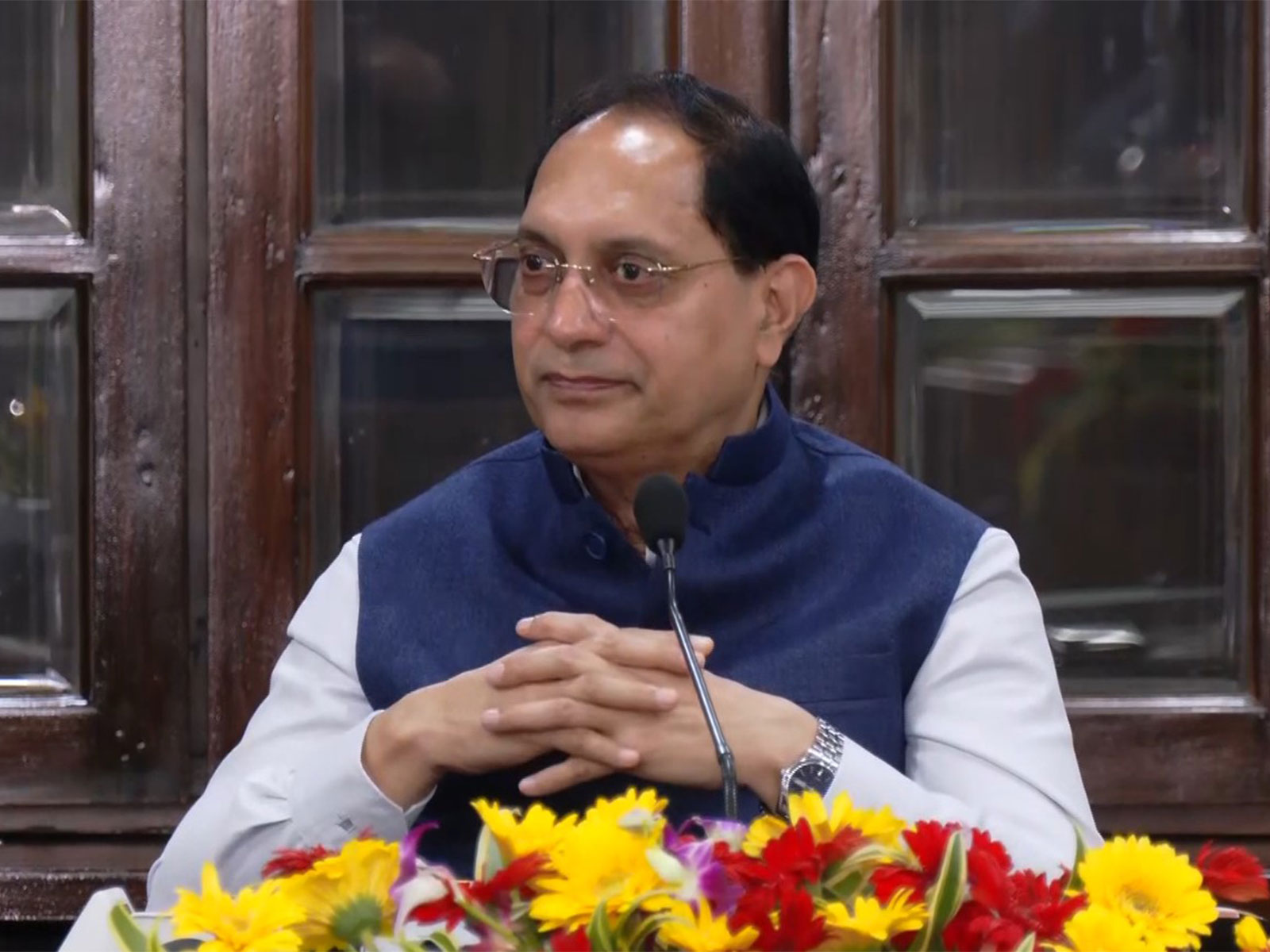 Interacting with
media persons after an Investor Awareness Programme organised by Association of
Mutual Funds in India (AMFI) here today, Pandey said the ongoing West Asia
crisis has triggered significant global economic disruptions through oil-linked
price and supply pressures, but India’s markets have shown notable stability in
the face of these challenges.
Interacting with
media persons after an Investor Awareness Programme organised by Association of
Mutual Funds in India (AMFI) here today, Pandey said the ongoing West Asia
crisis has triggered significant global economic disruptions through oil-linked
price and supply pressures, but India’s markets have shown notable stability in
the face of these challenges.
“The present crisis carries far-reaching
global implications, particularly because of its impact on energy markets. It
has triggered both supply-side and price-related shocks across economies,
creating inflationary pressures and secondary effects on growth worldwide.
Despite these uncertainties, Indian markets have displayed considerable
resilience,” he said.
Pandey noted that
domestic investors have continued to anchor the markets despite corrections and
sustained foreign institutional investor (FII) outflows since September 2024,
reflecting the growing maturity and confidence of Indian retail participation.
Highlighting the
transformation of India’s financial ecosystem over the past decade, the SEBI
Chairman said the country’s capital markets have evolved into a powerful engine
of economic growth, capital formation and household wealth creation.
India’s market
capitalisation, he said, has expanded nearly fivefold from around ₹95 trillion in FY16 to almost ₹463
trillion
by April 2026, while the corporate bond market has grown from ₹20 trillion to nearly ₹59 trillion
during the same period.
“Even in a challenging global environment,
India’s capital formation momentum has remained intact. During FY26 alone, the
country witnessed 366 IPOs, while several advanced economies struggled to see
meaningful primary market activity. This reflects the confidence of
entrepreneurs, investors and institutions in India’s long-term growth
trajectory,” he said.
Pandey added that
around ₹13.6 trillion was mobilised through
equity and debt markets during the last financial year, underlining the
increasing depth and dynamism of India’s financial markets.
He said one of the
strongest indicators of financial democratisation has been the rapid expansion
in retail participation. India now has nearly 145 million unique investors,
compared to just 38 million in FY19.
The mutual fund
industry, too, has witnessed exceptional growth, with assets under management
increasing from ₹12
trillion in FY16 to nearly ₹82 trillion by April 2026. Monthly SIP inflows have
surged from about ₹3,000 crore in April 2016 to more than ₹31,000 crore in
April 2026.
“This sharp rise in SIP participation reflects
a significant behavioural shift among Indian households towards disciplined,
long-term investing and wealth creation,” the SEBI Chairman observed.
At the same time, he
stressed the importance of broadening financial inclusion across regions and
demographics. Referring to SEBI’s Investor Survey 2025, he said while awareness
about securities market products has reached nearly 63 per cent of Indian households,
actual participation remains limited to only 9.5 per cent.
“Our focus should not
only be on growth, but on inclusive growth. A much larger section of
households, especially from rural India, still needs to be integrated into
formal investment channels,” he said.
Pandey said Odisha is
emerging as an important participant in India’s expanding financial landscape.
Investor participation from the state has increased more than tenfold over the
past decade, rising from around 2.5 lakh in FY15 to nearly 28.5 lakh in FY26.
He said Odisha
currently has nearly 15 lakh unique mutual fund investors holding close to 59
lakh folios with assets worth around ₹71,000 crore.
“Odisha is steadily positioning itself as an
important contributor to India’s financial growth story. To strengthen investor
outreach and deepen market engagement in the region, SEBI will soon establish
an office in the state capital,” he announced, adding that the rental agreement
for the office would be signed today.
Another focus of
Pandey’s interaction was the growing importance of municipal bonds as a
long-term financing mechanism for urban infrastructure development. Describing
municipal bonds as one of the world’s most significant instruments for
financing urban growth, he said India’s municipal bond market has the potential
to emerge as one of the country’s largest capital market segments over the next
15 to 20 years.
He noted that policy
support through recent Union Budgets are encouraging Urban Local Bodies to
increasingly access capital markets for infrastructure financing.
According to Pandey,
22 Urban Local Bodies across India have collectively raised over ₹4,500 crore through 31 municipal
bond issuances till FY26.
He said Odisha too
could adopt the instrument as a critical pillar of its future development
financing strategy.
“With broader public participation, municipal
bonds can evolve into a major source of funding for Odisha’s urban
infrastructure ambitions. Investments in such instruments are not merely
financial transactions — they represent direct participation in the development
of cities, states and the nation itself,” Pandey said.
He further observed
that mutual funds are also contributing indirectly to infrastructure creation
through investments in debt instruments, including corporate and municipal
bonds.
On the issue of
emerging technological risks, the SEBI Chairman flagged concerns over advanced
artificial intelligence tools and their potential misuse in cyberattacks and
market vulnerabilities. Referring to AI firm Anthropic’s Claude Mythos
platform, he warned that such technologies could significantly accelerate the
identification and exploitation of vulnerabilities if misused by malicious
actors.
“Certain next-generation AI systems are
capable of identifying vulnerabilities far more rapidly than conventional
tools. If such technologies fall into the wrong hands, they could amplify cyber
risks substantially. Regulators and market institutions therefore need to stay
ahead of these evolving threats,” he cautioned.
Pandey said SEBI has
already taken proactive measures and was among the first regulators globally to
issue formal advisories on AI-related cyber risks. He said accelerated patch
management systems, stronger incident response frameworks and the formation of
a dedicated “cybersuraksha.ai” group are helping safeguard the country’s
securities ecosystem.
On algorithmic
trading, he clarified that while algorithm-driven systems are permitted, they
remain subject to strict governance and transparency norms.
“Algorithmic trading is permitted within a
tightly regulated framework. Such systems must undergo rigorous exchange-level
simulations before deployment, and investors must receive adequate disclosures
wherever advisory services are algorithm-driven. Transparency remains central
to market integrity,” he said.
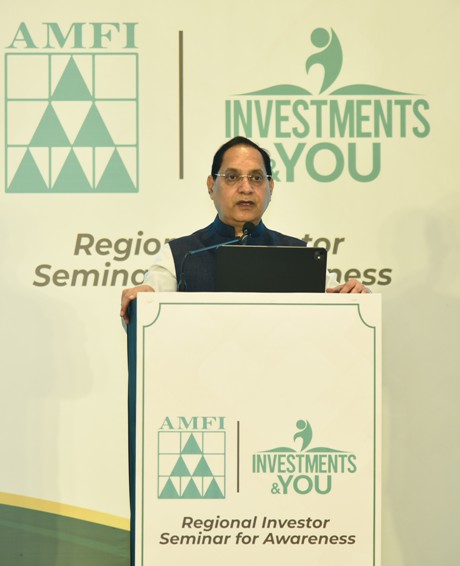 Earlier, addressing
the Investor Awareness Programme organised by AMFI, the SEBI Chairman highlighted
the increasing role of capital markets in mobilising household savings into
productive investments through diversified instruments such as equity, debt,
REITs, InvITs and municipal bonds.
Earlier, addressing
the Investor Awareness Programme organised by AMFI, the SEBI Chairman highlighted
the increasing role of capital markets in mobilising household savings into
productive investments through diversified instruments such as equity, debt,
REITs, InvITs and municipal bonds.
He also outlined
several investor protection initiatives undertaken by SEBI, including validated
UPI mechanisms, SEBI Check and simplified nomination processes.
Referring to the
launch of Project Jagrook, he said
the initiative would adopt a multilingual and integrated outreach strategy to
strengthen investor awareness and financial literacy across the country.
Speaking on the
occasion, Venkat Chalasani, Chief Executive of AMFI, said deeper participation
from emerging India would shape the next phase of growth for the mutual fund
industry.
“The next phase of growth for the mutual fund industry will be driven by deeper participation from emerging India. Rising awareness, disciplined investing through SIPs, and expanding financial inclusion are enabling more households to participate in India’s long-term growth story. AMFI remains committed to strengthening investor awareness and promoting informed financial participation across the country, paving the way for a faster transition toward a Vikshit Bharat.”
Discussions during the programme focused on strengthening participation from B-30 cities and women investors. Industry data shared during the event showed that B-30 locations now contribute nearly 19 per cent of the mutual fund industry’s total assets under management, while women account for more than 25 per cent of unique mutual fund investors nationwide.