
THEBUSINESSBYTES
BUREAU
BANGKOK,
OCTOBER 16, 2026
World Bank Group
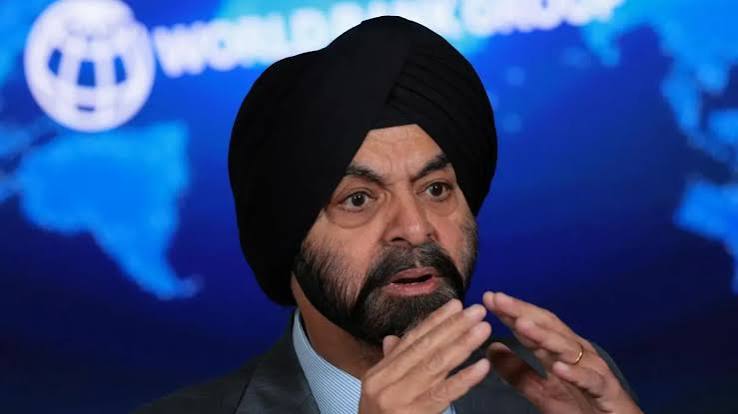
President Ajay Banga on Friday called for a major shift in development
financing by combining public funds, private investment, philanthropy and
technology to address an estimated 800 million jobs gap, saying the future of
development depends on mobilising capital at scale and creating employment
opportunities across developing economies.
Addressing the World
Bank Group's 2026 Annual Meetings plenary session here, Banga said 1.2 billion
young people are expected to enter the job market over the next 10 to 15 years,
while projections indicate only about 400 million jobs will be available,
underscoring the urgency of coordinated global action.
"The jobs gap is
a projection. It does not have to be our future," he said, stressing that
development institutions must move beyond traditional financing models and
adopt approaches that evolve with countries' needs.
Banga said the World
Bank Group was working to make scarce resources go further while helping
countries create jobs at scale. Public and concessional financing would remain
crucial in economies where risks are high and markets remain underdeveloped,
while private investment should assume a greater role as countries strengthen
their economies.
Highlighting the
institution's progress in mobilising private capital, Banga said the amount
rose to USD 112 billion last year from around USD 35 billion in FY22, marking a
more than threefold increase. Alongside its own financing, the World Bank
Group's total financing exceeded USD 230 billion.
Capital mobilisation
nearly tripled in lower-middle-income countries, quadrupled in
upper-middle-income economies and more than doubled across Africa, he said.
However, mobilisation remained flat in low-income countries, where attracting
commercial investment continues to be difficult.
Banga said the World
Bank Group had introduced a series of institutional reforms to improve
efficiency and expand lending capacity. Project preparation time was reduced
from 19 months to nine months, while a restructuring of its balance sheet
created more than USD 100 billion in additional International Bank for
Reconstruction and Development lending capacity over a decade.
The institution also
increased pay-for-results financing from about one-third to half of its
financing and replaced 153 scorecard measures with 22 indicators focused on
impact.
Emphasising the
importance of infrastructure, policy certainty and investment at scale, Banga
said employers needed reliable electricity, water, transport and digital
connectivity, while businesses required predictable regulations, effective
institutions and easier access to finance.
The World Bank Group
committed USD 40 billion last year towards physical and human infrastructure,
while 30 per cent of its public sector financing supported policy and
institutional reforms, he said.
Banga also
highlighted the growing role of small businesses in employment generation,
particularly in fragile and conflict-affected economies where larger companies
may be reluctant to invest. The group's new strategy for micro, small and
medium enterprises aims to improve access to finance, connect businesses with
larger markets and simplify regulations.
Technology,
particularly practical applications of artificial intelligence, could further
strengthen development outcomes by helping farmers improve yields, teachers
personalise instruction, health workers make better-informed decisions and
entrepreneurs reach new customers, he said.
Outlining key
development targets, Banga said the World Bank Group and the African
Development Bank had helped 59 million people gain electricity access under
Mission 300, which aims to connect 300 million people across Africa by 2030.
The institution is
also working towards improving water security for 400 million people and
supporting efforts to help 200 million smallholder farmers move from
subsistence farming to surplus production by 2030. Under its HealthWorks
initiative, the group aims to expand access to quality and affordable health
services, with around 600 million people already reached towards a broader
target of 1.5 billion.
Banga said six
multilateral development banks were working to establish common mechanisms to
assess, package and transfer investments, enabling institutions to free up
capital tied to long-term projects and finance new development initiatives.
Such measures could
help create an emerging-market development asset class and expand financing
beyond the limits of individual institutions' balance sheets, he said.
"A job is not a
statistic. A job is dignity," Banga said, calling for greater urgency in
creating opportunities for the next generation.
He said the World Bank Group's future development model would combine public money where markets could not yet reach, private capital where it could generate jobs and scale, philanthropy to absorb early risks, and technology to improve the impact of every dollar invested.
The ultimate objective, he said, was to help countries build stronger economies, generate employment and eventually become less dependent on assistance.