THEBUSINESSBYTES
BUREAU
RAIPUR/JAGDALPUR/SARGUJA,
MARCH 31, 2026
The inaugural edition
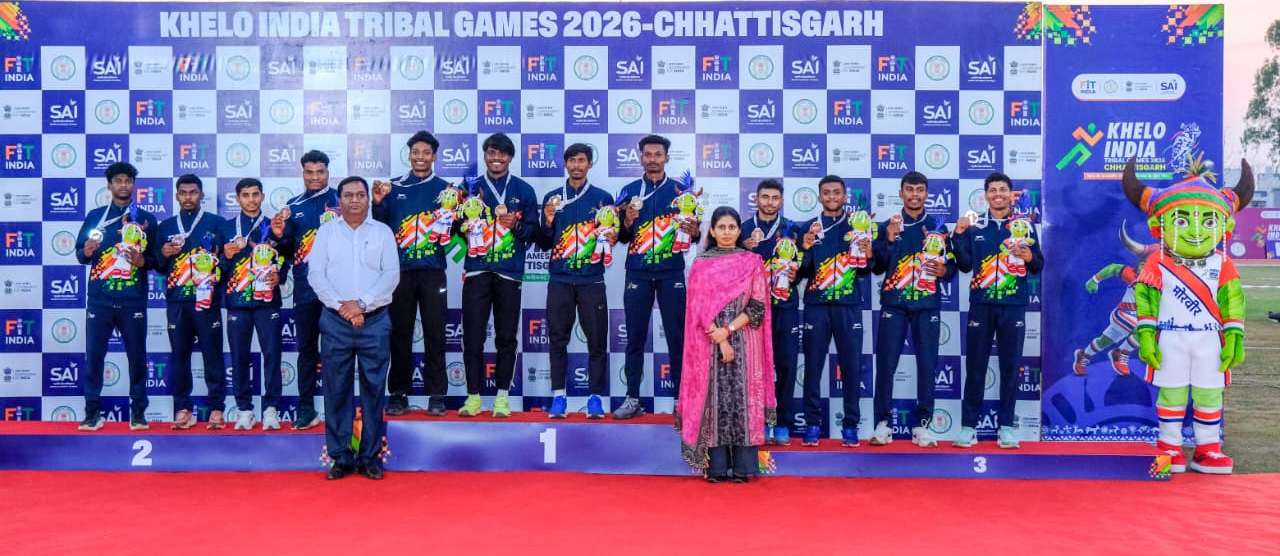
of the Khelo India Tribal Games (KITG) 2026 has emerged as a transformative
national platform aimed at identifying grassroots talent and empowering tribal
youth through sports. Union Minister of State for Youth Affairs & Sports, Raksha
Nikhil Khadse, on Tuesday visited competition venues across Raipur, Jagdalpur
and Sarguja and highlighted the Games as a significant step towards building a
stronger sporting ecosystem rooted in India’s rich tribal heritage.
The first edition of
KITG has brought together nearly 3,800 participants, including athletes,
coaches and officials, competing across nine sporting disciplines, comprising
seven medal events and two demonstration sports, with a total of 106 gold
medals at stake. The official mascot, Mor Veer, symbolises courage, pride and
the spirit of over 700 tribal communities, reflecting the deep cultural roots
that inspire the Games.
 Addressing
participants, Khadse emphasised that sports go beyond competition and serve as
a powerful instrument for empowerment, confidence-building and national
integration. She described the Khelo India Tribal Games as a growing social
movement that seeks to revive India’s traditional sporting legacy while
enabling tribal youth to realise their full potential. She added that the
initiative aligns with the vision of ensuring that every village in India
produces champions capable of representing the nation at the highest levels.
Addressing
participants, Khadse emphasised that sports go beyond competition and serve as
a powerful instrument for empowerment, confidence-building and national
integration. She described the Khelo India Tribal Games as a growing social
movement that seeks to revive India’s traditional sporting legacy while
enabling tribal youth to realise their full potential. She added that the
initiative aligns with the vision of ensuring that every village in India
produces champions capable of representing the nation at the highest levels.
Referring to the
vision of Prime Minister Narendra Modi, Khadse stated that India is working
towards becoming a top-10 sporting nation by the 2036 Olympics and aims to
enter the top five by the time the country achieves the Viksit Bharat milestone
in 2047. She underlined that initiatives like KITG play a vital role in
strengthening the grassroots sporting structure needed to achieve these
ambitious national goals.
Khadse noted that
regional initiatives such as the Bastar Olympics and Sarguja Olympics already
demonstrate the vibrant sporting culture prevalent in tribal areas. According
to her, the Khelo India Tribal Games provide an institutional pathway to
identify, nurture and elevate this natural talent onto the national stage.
Highlighting the
Ministry’s emphasis on promoting women’s participation in sports, Khadse
referred to the success of the ASMITA Leagues, under which 124 leagues have
enabled nearly 14,000 girls to participate in disciplines such as football and
hockey, including in sensitive and Left Wing Extremism-affected regions. She
observed that such initiatives are creating meaningful opportunities for girls
from rural and tribal communities and strengthening women’s empowerment through
sports.
She further informed
that coaches from the Sports Authority of India have been deployed across all
seven competition venues to scout emerging talent during the Games.
Top-performing athletes will be directly integrated into the Khelo India
ecosystem, ensuring a seamless pathway from grassroots participation to
podium-level excellence.
Emphasising India’s
civilisational legacy in traditional sports, Khadse said tribal communities
have historically played a pioneering role in disciplines such as archery and
other indigenous games. The Khelo India Tribal Games, she noted, not only
promote modern competitive sports but also celebrate and revive centuries-old
traditions that reflect India’s cultural diversity.
Appreciating the
enthusiastic participation across venues, Khadse described the Games as a
meaningful initiative contributing to tribal empowerment, youth development and
the strengthening of India’s sporting future.
During her visit to Jagdalpur, the Minister was accompanied by several senior dignitaries including Sanjay Pandey, Mayor, Jagdalpur; Mayank Srivastava, DDG Khelo India; Shalabh Sinha, Superintendent of Police; Akash Chhikara, District Magistrate; Pratik Jain, CEO, Zilla Panchayat; Rishikesh Tiwari, SDM, Jagdalpur; Tanuja Salam, Director (Sports), Chhattisgarh; Mamta Shree Ojha, Director, Khelo India; and Doman Singh, Commissioner, Bastar.
The programme concluded with interactions between the Minister, athletes, coaches and officials, along with a review of talent identification initiatives currently underway at the competition venues, reaffirming the Government’s commitment to nurturing sporting excellence from India’s tribal heartland.