THEBUSINESSBYTES
BUREAU
NEW
YORK/MUMBAI, SEPTEMBER 29, 2026
India’s experience in
deploying artificial intelligence, digital public infrastructure and
population-scale development solutions came under the global spotlight at the
fifth edition of ‘India Day @ UNGA’,
with policymakers and international institutions calling for stronger
partnerships to take proven innovations beyond national borders.
The event, organised
by Reliance Foundation, the United
Nations in India and the Observer Research Foundation (ORF) during the week of
the 81st United Nations General Assembly, brought together governments,
multilateral organisations, civil society and the private sector to examine how
technology and innovative development models can help accelerate progress
towards the 2030 Sustainable Development Goals.
Held on September 24,
the programme featured discussions on artificial intelligence, digital public
infrastructure, women-led development, healthcare and inclusive growth, while a
high-level ministerial dialogue examined new approaches to international
development cooperation amid geopolitical, climate and technological
disruptions.
 External Affairs
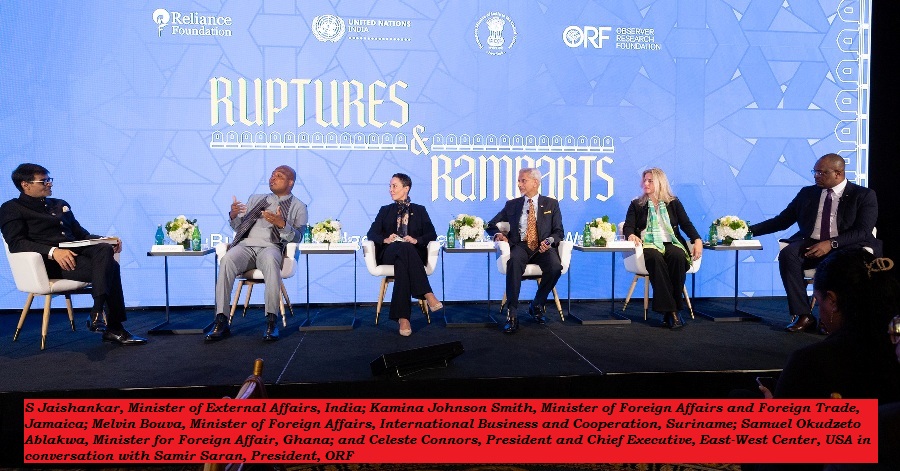
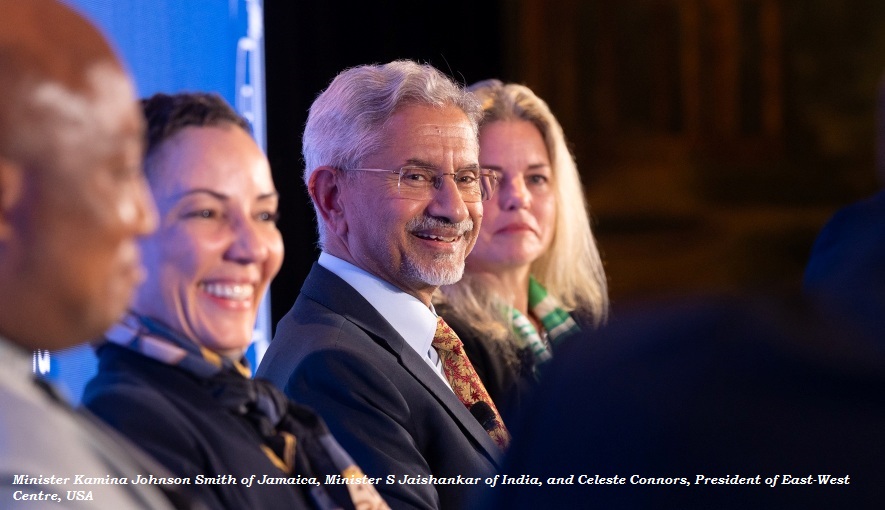
Minister S Jaishankar, who participated in the ministerial session ‘Ruptures
& Ramparts: Building Bridges for a Changing World’, underlined the role of
multilateral institutions and cooperation in addressing contemporary global
challenges.
External Affairs
Minister S Jaishankar, who participated in the ministerial session ‘Ruptures
& Ramparts: Building Bridges for a Changing World’, underlined the role of
multilateral institutions and cooperation in addressing contemporary global
challenges.
“The UN is central to the international system
– BRICS is supportive to the UN system. The issues that were highlighted by
BRICS are the key issues today – sustainability, co-operation which issues for
the United Nations as well,” Jaishankar said.
The ministerial
conversation, which also featured Jamaica's Foreign Affairs and Foreign Trade
Minister Kamina Johnson Smith, Suriname's Foreign Affairs, International
Business and Cooperation Minister Melvin Bouva, Ghana's Foreign Affairs
Minister Samuel Okudzeto Ablakwa and East-West Center President and Chief
Executive Celeste Connors, explored the need for a development compact centred
on innovation, technology, finance and partnerships.
Ablakwa said
developing countries needed to engage with the global system as equal partners
and seek arrangements that maximise the benefits of international cooperation.
The discussions
reflected the growing focus on how technologies such as AI can be integrated
into public systems while ensuring that innovation remains accessible to
populations at scale.
Rohit Kansal,
Secretary, Department of Rural Development, said India's experience
demonstrated that the significance of technology lay not merely in the numbers
reached but in the infrastructure and ecosystems created to enable widespread
access.
“The real message is not in the numbers, it’s
the kind of infrastructure that we’ve built. India’s message is at population
scale; we democratize access, we build the architecture, and we leave the
ecosystem to do the rest,” Kansal said.
“Humans need not learn the language of AI, but
AI should learn the language of human,” he added.
Healthcare was
another major focus, with Punya Salila Srivastava, Secretary, Ministry of
Health and Family Welfare, stressing the importance of combining physical
infrastructure with digital technologies and AI to build stronger health
systems.
“Infrastructure and technology need to work
together to achieve what we want it to achieve. We will need to have the
infrastructure, but we will also have to have AI and digital technology to
build a healthier future for others,” she said.
Energy and AI were
also discussed as increasingly interconnected areas of development. Santosh
Kumar Sarangi, Secretary, Ministry of New and Renewable Energy, said AI could
help make energy infrastructure more resilient and improve the efficiency of
distribution companies.
“Energy for AI will not be a problem, but a
solution once we have addressed AI for energy,” Sarangi said, highlighting the
potential of AI to strengthen energy systems and improve distribution
efficiency.
The event's broader
programme featured four thematic sessions covering the future of development in
an era of intelligence and instability, health and opportunities for women,
children and youth, population-scale AI adoption and emerging approaches to AI
governance.
The session ‘Beyond
2030: Rewiring Development for an Age of Intelligence, Inclusion and
Instability’ examined the impact of geopolitical, climate, demographic and
technological changes on development pathways.
‘Women, Children and Youth: Building Healthier
Futures for the Next Billion’ focused on public systems, community-led
delivery, technology and partnerships aimed at improving health, education and
economic opportunities.
‘The AI Promise: Diffusion at Population
Scale’ explored applications of AI across languages, sectors, institutions and
public service delivery, particularly in India and the Global South.
The concluding
discussion on ‘Rules of Engagement: AI Governance for a Changing World’
examined AI regulation, data governance, institutional capacity and responsible
technology deployment.
Stefan Priesner,
United Nations Resident Coordinator in India, said the remaining years before
2030 could still provide an opportunity to scale solutions that have
demonstrated results in India.
“Four years remain until 2030. That is not
long, but it is long enough if the solutions India has proven at home can
travel the world,” Priesner said.
B Srinivasan,
Executive Lead, Reliance Foundation, said the scale and complexity of
contemporary development challenges required cooperation extending beyond
individuals, institutions and nations.
“In the changing world scenario today, AI and
development is beyond individuals, institutions and nations. The challenges are
complex, but the solution is in a new world, driven by humanity,” he said.
ORF President Samir Saran
said the central purpose of India Day was to examine how technology,
innovation, partnerships, philanthropy and international institutions could
work together to improve human development.
“AI is not just a passion project of ‘tech
bros’ but a broader human project that can change how societies prosper and
service each other,” Saran said.
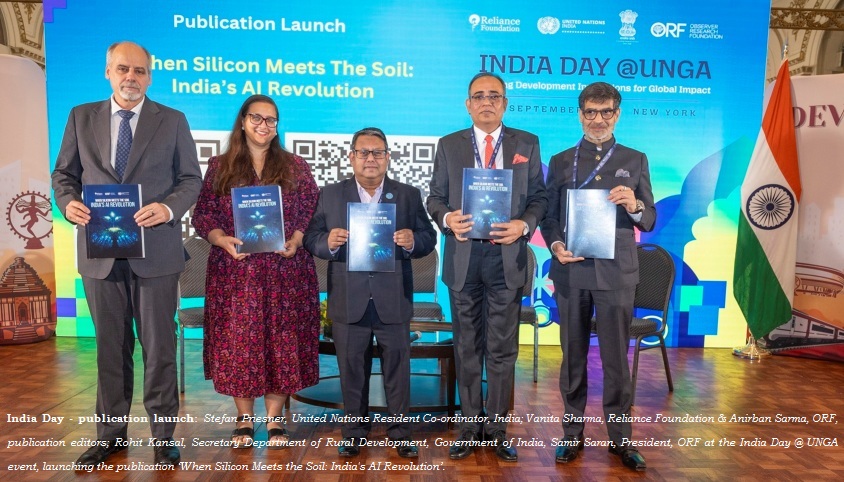 The programme also
saw the launch of the fifth India Day @ UNGA publication, When Silicon Meets the Soil:
India's AI Revolution, which examines India's experience with
artificial intelligence across 18 chapters and explores the country's emergence
as a major source of AI use cases.
The programme also
saw the launch of the fifth India Day @ UNGA publication, When Silicon Meets the Soil:
India's AI Revolution, which examines India's experience with
artificial intelligence across 18 chapters and explores the country's emergence
as a major source of AI use cases.
Vishal Harsh, Deputy
Consul General at the Consulate General of India, said India's scale made its
development experience relevant to countries seeking solutions that could reach
large populations.
“Development and innovation matter most when
they reach the last person. AI is the next major opportunity. Solutions
developed at scale in India can support countries across the Global South,” he
said.
Since its launch in 2022, India Day @ UNGA has sought to provide a platform for discussions on development models, technology, partnerships and innovations emerging from India.
The 2026 edition placed particular emphasis on taking solutions developed in local contexts to population scale and exploring how such models could be adapted and shared across the Global South and beyond.