
THEBUSINESSBYTES BUREAU
BHUBANESWAR, FEBRUARY 20, 2026
In the tribal heartlands of southern Odisha, where limited livelihood
options have historically pushed young people to migrate in search of work, a
new entrepreneurship drive is reshaping local aspirations. UDYAMEE 2.0,
supported by Utkal Alumina International Limited (UAIL) and implemented by the
Entrepreneurship Development Institute of India (EDII), is fostering a culture
of enterprise across 181 villages in Rayagada’s Kashipur block and Kalahandi’s
Thuamul Rampur block, aiming to create sustainable livelihoods within
communities.
Launched in August 2024 and scheduled to run through 2027, the initiative
focuses on promoting non-farm and agri-allied ventures with strong
participation from women and SC/ST communities. By aligning business
opportunities with local resources and market demand, the programme seeks to
build self-reliance while reducing distress migration. At its centre is a Rural
Incubation Centre that provides end-to-end support, from ideation and skill
training to formal registration, access to finance, branding and market linkages.
 The incubation model combines classroom learning with exposure visits,
mentoring by industry experts and convergence with government schemes such as
PMFME and PMEGP. A financial pool of over ₹69.95 lakh is currently being
mobilised through project support,
entrepreneur contributions and scheme convergence, serving as both seed capital
for new ventures and growth funding for scaling existing enterprises.
The incubation model combines classroom learning with exposure visits,
mentoring by industry experts and convergence with government schemes such as
PMFME and PMEGP. A financial pool of over ₹69.95 lakh is currently being
mobilised through project support,
entrepreneur contributions and scheme convergence, serving as both seed capital
for new ventures and growth funding for scaling existing enterprises.
“UDYAMEE 2.0 is about creating
opportunity where people live,” said Dr. Sunil Shukla, Director General, EDII.
“By building local entrepreneurship ecosystems in districts like Rayagada and
Kalahandi, we are enabling rural youth, especially women and tribal
communities, to see enterprise creation as a viable and aspirational path. The
focus is not just on starting businesses, but on nurturing confident
entrepreneurs who can generate income, employment and long-term resilience
within their communities.”
The second phase builds on the outcomes of the earlier UDYAMEE programme
implemented between 2021 and 2024, which promoted 301 enterprises and generated
nearly ₹3.95 crore
in cumulative income. The first phase recorded an average monthly income rise
of ₹14,771 per entrepreneur, with 80 per cent of ventures
led by SC/ST participants. Women played a prominent role, heading 199
individual enterprises and 10 group ventures, while the initiative also created
248 indirect employment opportunities.
Under UDYAMEE 2.0, the target is to nurture 350 entrepreneurs, including
250 new entrants and 100 existing entrepreneurs from the earlier phase who will
be supported to scale up. So far, 35 entrepreneurs — 23 of them women — have
received assistance. Ten collective enterprises have been identified, six of
which are in the pre-operational stage and expected to begin business by March
2026, involving 47 entrepreneurs. The programme is also facilitating more than
20 additional collective ventures and aims to generate over 100 direct jobs by
March next year.
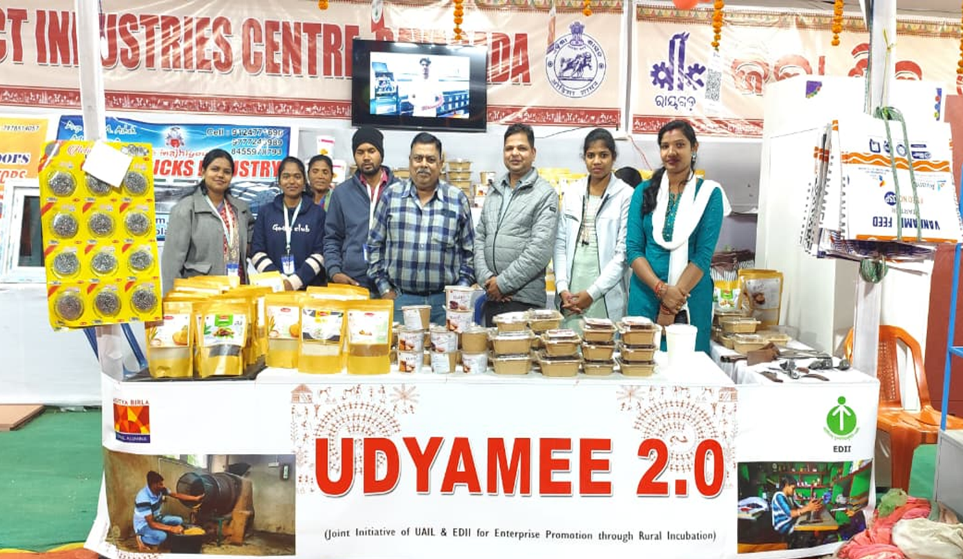
The range of enterprises emerging under the initiative reflects a blend
of local resource use and market-oriented thinking. Millet-based cafés and
cloud kitchens are tapping into Odisha’s traditional crops and the growing demand
for nutritious foods. Fly ash brick units are linked to regional industrial
activity, while agricultural processing ventures are adding value to local
produce. Other planned businesses include notebook manufacturing, hospitality
services such as restaurant-cum-banquet facilities, and furniture units that
promote indigenous woodcraft skills.
Beyond income generation, the programme is positioning entrepreneurship as a viable alternative to migration, particularly for tribal youth and women. By strengthening local supply chains, encouraging collective enterprises and connecting entrepreneurs to formal financial systems, UDYAMEE 2.0 is contributing to decentralised economic development in some of Odisha’s most underserved regions.
As the state sharpens its focus on inclusive growth, the initiative offers a replicable model for grassroots enterprise development. By combining corporate social responsibility support, institutional expertise and government scheme convergence, UDYAMEE 2.0 demonstrates how targeted interventions can transform rural economies, convert local skills into viable businesses and keep young talent rooted in their communities.